Ottila Juliane Kron
Decomposing Fractions Worksheet
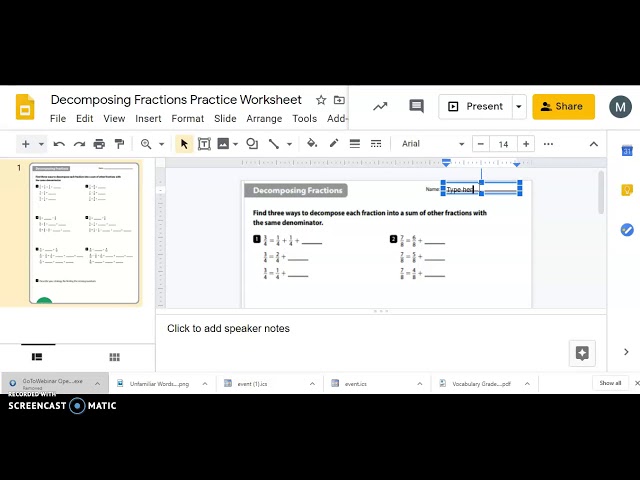
A decomposing fractions worksheet is a tool that can help students understand how to break down fractions into smaller, more manageable parts. This can be a helpful way to learn how to add, subtract, multiply, and divide fractions.
There are many different ways to create a decomposing fractions worksheet. One common method is to use a table. The table can have two columns, one for the original fraction and one for the decomposed fraction. For example, the fraction 3/4 could be decomposed into 1/4 + 1/4 + 1/4.
Another way to create a decomposing fractions worksheet is to use a diagram. The diagram can show how the original fraction is broken down into smaller parts. For example, the fraction 3/4 could be represented by a diagram that shows three equal parts, each of which is shaded in to represent 1/4 of the whole.
Decomposing fractions worksheets can be a helpful tool for students who are struggling to understand fractions. They can provide a visual representation of how fractions are broken down, which can make it easier to understand how to perform operations on fractions.
In addition to helping students understand fractions, decomposing fractions worksheets can also help students develop their problem-solving skills. By breaking down fractions into smaller parts, students can learn how to approach problems in a more systematic way.
Key Aspects of Decomposing Fractions Worksheets
Decomposing fractions worksheets are an essential tool for helping students understand fractions. They can be used to teach a variety of concepts, including:
- Equivalent fractions: Decomposing fractions can help students understand that different fractions can represent the same value.
- Adding and subtracting fractions: Decomposing fractions can make it easier to add and subtract fractions with different denominators.
- Multiplying and dividing fractions: Decomposing fractions can also be used to multiply and divide fractions.
- Simplifying fractions: Decomposing fractions can help students simplify fractions by finding equivalent fractions with smaller denominators.
- Comparing fractions: Decomposing fractions can help students compare fractions by finding equivalent fractions with the same denominator.
- Solving fraction problems: Decomposing fractions can help students solve fraction problems by breaking them down into smaller, more manageable steps.
- Visual representation: Decomposing fractions worksheets often use visual representations, such as diagrams and tables, to help students understand the concepts.
- Problem-solving: Decomposing fractions worksheets can help students develop their problem-solving skills by requiring them to think critically about how to break down fractions.
Decomposing fractions worksheets are a valuable tool for teaching fractions. They can help students understand a variety of fraction concepts and develop their problem-solving skills.
Equivalent fractions
Decomposing fractions is a process of breaking down a fraction into smaller, equivalent fractions. This can be done by finding common factors between the numerator and denominator of the fraction. For example, the fraction 3/4 can be decomposed into the equivalent fractions 1/4 + 1/4 + 1/4.
Decomposing fractions can help students understand that different fractions can represent the same value. For example, the fractions 1/2, 2/4, and 3/6 are all equivalent fractions because they all represent the same value, which is half.
- Common factors: Decomposing fractions can help students identify common factors between the numerator and denominator of a fraction. This can be helpful for simplifying fractions and for finding equivalent fractions.
- Equivalent fractions: Decomposing fractions can help students understand that different fractions can represent the same value. This can be helpful for comparing fractions and for solving fraction problems.
- Simplifying fractions: Decomposing fractions can help students simplify fractions by finding equivalent fractions with smaller denominators. This can make it easier to perform operations on fractions.
- Solving fraction problems: Decomposing fractions can help students solve fraction problems by breaking them down into smaller, more manageable steps. This can make it easier to find solutions to fraction problems.
Decomposing fractions is a valuable skill for students to learn. It can help them understand fractions, simplify fractions, and solve fraction problems.
Adding and subtracting fractions
Adding and subtracting fractions with different denominators can be challenging for students. However, decomposing fractions can make this process much easier. By breaking down fractions into smaller, equivalent fractions with the same denominator, students can add and subtract them more easily.
For example, let’s say we want to add the fractions 1/2 and 1/4. We can decompose 1/2 into 2/4, so now we have two fractions with the same denominator: 2/4 + 1/4. We can then add these fractions to get 3/4.
Decomposing fractions can also be helpful for subtracting fractions with different denominators. For example, let’s say we want to subtract the fraction 1/4 from the fraction 1/2. We can decompose 1/2 into 2/4, so now we have two fractions with the same denominator: 2/4 – 1/4. We can then subtract these fractions to get 1/4.
Decomposing fractions is a valuable skill for students to learn. It can help them add and subtract fractions with different denominators, which is an important skill for solving fraction problems.
Multiplying and dividing fractions
Decomposing fractions is a valuable skill for students to learn. It can be used to simplify fractions, add and subtract fractions, and multiply and divide fractions.
- Multiplying fractions: Decomposing fractions can make it easier to multiply fractions. For example, let’s say we want to multiply the fractions 1/2 and 1/4. We can decompose 1/2 into 2/4, so now we have two fractions with the same denominator: 2/4 * 1/4. We can then multiply these fractions to get 1/8.
- Dividing fractions: Decomposing fractions can also be used to divide fractions. For example, let’s say we want to divide the fraction 1/2 by the fraction 1/4. We can decompose 1/2 into 2/4, so now we have two fractions with the same denominator: 2/4 1/4. We can then divide these fractions to get 2.
Decomposing fractions is a versatile skill that can be used to perform a variety of operations on fractions. It is an important skill for students to learn in order to succeed in mathematics.
Simplifying fractions
Simplifying fractions is an important skill for students to learn. It can help them to perform operations on fractions more easily, and it can also help them to understand the concepts of fractions and ratios.
Decomposing fractions is a valuable tool for simplifying fractions. By breaking down a fraction into smaller, equivalent fractions with smaller denominators, students can make it easier to perform operations on the fraction. For example, the fraction 3/8 can be decomposed into the equivalent fraction 1/4 + 1/8. This makes it easier to add, subtract, multiply, and divide the fraction.
Decomposing fractions worksheets can help students to practice simplifying fractions. These worksheets can provide students with a variety of exercises that will help them to develop their skills in decomposing fractions and simplifying fractions.
Here is an example of a decomposing fractions worksheet:
- Simplify the fraction 3/6.
- Decompose the fraction 5/8 into two equivalent fractions with smaller denominators.
- Simplify the fraction 7/12.
Decomposing fractions worksheets can be a helpful tool for students who are struggling to simplify fractions. These worksheets can provide students with the practice they need to develop their skills in decomposing fractions and simplifying fractions.
Comparing fractions
Comparing fractions is an important skill for students to learn. It allows them to determine which fraction is greater or lesser, and it can also be used to solve a variety of math problems.
Decomposing fractions is a valuable tool for comparing fractions. By breaking down fractions into smaller, equivalent fractions with the same denominator, students can make it easier to compare the fractions. For example, the fractions 1/2 and 3/4 can be decomposed into the equivalent fractions 2/4 and 3/4, respectively. This makes it clear that 3/4 is greater than 1/2.
Decomposing fractions worksheets can help students to practice comparing fractions. These worksheets can provide students with a variety of exercises that will help them to develop their skills in decomposing fractions and comparing fractions.
Here is an example of a decomposing fractions worksheet:
- Compare the fractions 1/2 and 3/4.
- Decompose the fractions 5/8 and 7/12 into equivalent fractions with the same denominator.
- Compare the fractions 3/5 and 4/7.
Decomposing fractions worksheets can be a helpful tool for students who are struggling to compare fractions. These worksheets can provide students with the practice they need to develop their skills in decomposing fractions and comparing fractions.
In conclusion, decomposing fractions is a valuable skill for students to learn. It can help them to simplify fractions, add and subtract fractions, multiply and divide fractions, compare fractions, and solve fraction problems. Decomposing fractions worksheets can be a helpful tool for students who are struggling to learn these skills.
Solving fraction problems
Solving fraction problems can be challenging for students, especially when the fractions have different denominators or when the problem involves multiple steps. Decomposing fractions can help students break down these problems into smaller, more manageable steps, making them easier to solve.
For example, let’s say a student is trying to solve the following problem:
A recipe calls for 1/2 cup of flour and 1/4 cup of sugar. If I want to make double the recipe, how much flour and sugar will I need?
The student could start by decomposing the fractions 1/2 and 1/4 into equivalent fractions with the same denominator. For example, 1/2 can be decomposed into 2/4 and 1/4 can be decomposed into 1/4.
Now the student has two fractions with the same denominator, which makes it easier to double the recipe. The student can simply double the numerators of the fractions to get 4/4 cup of flour and 2/4 cup of sugar.
Decomposing fractions can also be helpful for solving fraction problems that involve multiple steps. For example, let’s say a student is trying to solve the following problem:
A store is selling apples for 1/2 per pound. If I buy 3 pounds of apples, how much will it cost?
The student could start by decomposing the fraction 1/2 into an equivalent fraction with a denominator of 100. For example, 1/2 can be decomposed into 50/100.
Now the student can multiply the fraction 50/100 by 3 to get 150/100. This means that 3 pounds of apples will cost $1.50.
Decomposing fractions is a valuable skill for students to learn. It can help them solve fraction problems more easily and accurately.
Decomposing fractions worksheets can be a helpful tool for students who are struggling to solve fraction problems. These worksheets can provide students with practice decomposing fractions and solving fraction problems.
Visual representation
Decomposing fractions worksheets often use visual representations, such as diagrams and tables, to help students understand the concepts. This is because visual representations can make it easier for students to understand the relationship between the numerator and denominator of a fraction, and how fractions can be broken down into smaller parts.
For example, a diagram of a fraction can show students how the numerator and denominator represent the number of parts of a whole. A table can show students how a fraction can be decomposed into smaller fractions with the same value.
Visual representations can be especially helpful for students who are struggling to understand fractions. By using visual representations, students can see how fractions work in a concrete way, which can help them to develop a better understanding of the concept.
Here are some examples of how visual representations can be used to teach decomposing fractions:
- A diagram can be used to show how the fraction 1/2 can be decomposed into two equal parts.
- A table can be used to show how the fraction 3/4 can be decomposed into three equal parts.
- A diagram can be used to show how the fraction 5/8 can be decomposed into five equal parts.
Visual representations can be a valuable tool for teaching decomposing fractions. By using visual representations, students can see how fractions work in a concrete way, which can help them to develop a better understanding of the concept.
Problem-solving
Decomposing fractions worksheets are a valuable tool for teaching fractions. They can help students understand the concept of fractions, simplify fractions, add and subtract fractions, multiply and divide fractions, compare fractions, and solve fraction problems.
One of the most important benefits of decomposing fractions worksheets is that they can help students develop their problem-solving skills. Decomposing fractions requires students to think critically about how to break down fractions into smaller parts. This skill is essential for solving a variety of math problems, including:
- Adding and subtracting fractions with different denominators
- Multiplying and dividing fractions
- Solving fraction word problems
For example, let’s say a student is trying to solve the following problem:
A recipe calls for 1/2 cup of flour and 1/4 cup of sugar. If I want to make double the recipe, how much flour and sugar will I need?
To solve this problem, the student needs to decompose the fractions 1/2 and 1/4 into equivalent fractions with the same denominator. Once the student has done this, they can easily double the recipe.
Decomposing fractions worksheets can help students develop the critical thinking skills they need to solve these types of problems. By providing students with practice decomposing fractions, these worksheets can help them become more confident and successful in math.
A decomposing fractions worksheet is an educational tool designed to help students understand the concept of decomposing fractions, a fundamental operation in mathematics. These worksheets provide a structured approach for students to break down complex fractions into simpler, more manageable parts.
Decomposing fractions is essential for performing various mathematical operations, such as adding, subtracting, multiplying, and dividing fractions. By decomposing fractions, students can identify equivalent fractions, simplify complex fractions, and solve fraction-based word problems. Decomposing fractions worksheets facilitate this learning process, providing students with ample practice and guidance.
In addition to their mathematical benefits, decomposing fractions worksheets also contribute to the development of critical thinking and problem-solving skills. They encourage students to analyze fractions, identify patterns, and apply logical reasoning to decompose fractions effectively. These skills are transferable to other areas of mathematics and beyond, fostering a deeper understanding of numerical concepts and problem-solving strategies.
FAQs on Decomposing Fractions Worksheets
Decomposing fractions is a fundamental skill in mathematics, and worksheets are an effective way to practice and reinforce this concept. Here are some frequently asked questions (FAQs) about decomposing fractions worksheets:
Question 1: What is the purpose of a decomposing fractions worksheet?
Answer: Decomposing fractions worksheets provide structured practice for students to break down complex fractions into simpler parts. This process helps students understand fraction equivalence, simplify complex fractions, and solve fraction-based word problems.
Question 2: How do decomposing fractions worksheets benefit students?
Answer: Decomposing fractions worksheets enhance students’ understanding of fractions, promote critical thinking, and develop problem-solving abilities. By analyzing fractions and identifying patterns, students develop logical reasoning skills applicable to various mathematical concepts.
Question 3: Are decomposing fractions worksheets suitable for all students?
Answer: Decomposing fractions worksheets cater to students of varying abilities. They can be differentiated based on difficulty level to provide appropriate challenges and support for each student’s learning needs.
Question 4: How can I incorporate decomposing fractions worksheets into my math lessons?
Answer: Decomposing fractions worksheets can be integrated into math lessons as practice exercises, homework assignments, or formative assessments. They can also serve as a review tool before assessments.
Question 5: Where can I find decomposing fractions worksheets?
Answer: Decomposing fractions worksheets are widely available online and in educational resource libraries. Teachers can also create their own worksheets tailored to their students’ specific needs.
Question 6: Are there any online resources or games that support decomposing fractions practice?
Answer: Yes, there are numerous online resources and educational games available to supplement decomposing fractions practice. These resources provide interactive and engaging activities to reinforce the concept.
Summary: Decomposing fractions worksheets are valuable tools for students to develop a strong understanding of fractions and problem-solving skills. By incorporating these worksheets into math lessons, educators can effectively support students’ learning and foster their mathematical proficiency.
Transition to the next article section: To further enhance students’ understanding of fractions, exploring equivalent fractions and fraction operations through engaging activities can be beneficial. The following section discusses strategies and resources for teaching these concepts.
Conclusion
Decomposing fractions worksheets play a pivotal role in solidifying students’ understanding of fractions, empowering them with the skills to navigate complex mathematical operations and problem-solving scenarios with confidence. Through the systematic decomposition of fractions, students gain a deep comprehension of fraction equivalence, simplification, and application.
Incorporating decomposing fractions worksheets into math lessons provides a structured and progressive approach to fraction learning. As students engage with these worksheets, they develop critical thinking, logical reasoning, and problem-solving abilities that extend beyond the realm of fractions. These skills are essential for success in higher-level mathematics and real-world problem-solving.
As educators, it is imperative to recognize the significance of decomposing fractions as a cornerstone of mathematical proficiency. By embracing decomposing fractions worksheets as a valuable teaching tool, we equip students with the foundational knowledge and skills necessary to excel in mathematics and beyond.
Youtube Video: