Ottila Juliane Kron
Adding and Subtracting Directed Numbers Worksheet
A directed number is a number that has both a magnitude and a direction. The magnitude is the absolute value of the number, and the direction is indicated by a plus or minus sign. Adding and subtracting directed numbers follows the same rules as adding and subtracting regular numbers, but there are a few things to keep in mind.
Steps to add and subtract directed numbers:
If the signs are the same, add the magnitudes and keep the sign.If the signs are different, subtract the smaller magnitude from the larger magnitude and give the answer the sign of the larger magnitude.If one number is zero, the answer is the other number.
Here are some examples of adding and subtracting directed numbers:
| Problem | Solution |
|---|---|
| 5 + (-3) | 2 |
| -7 – (-2) | -5 |
| 0 + 4 | 4 |
Benefits of using a chart or diagram to add and subtract directed numbers:
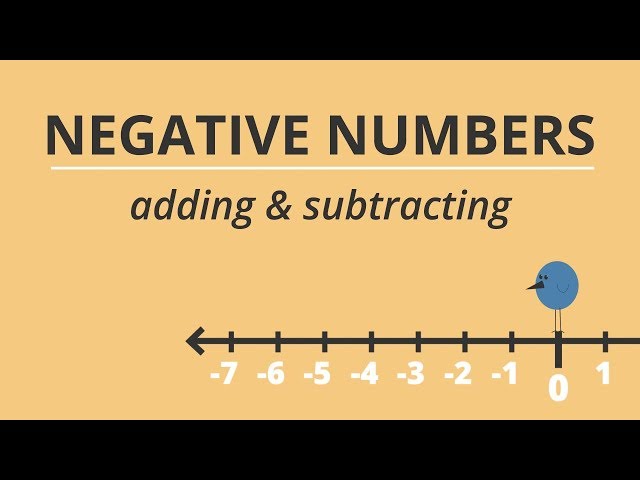
A chart or diagram can help you visualize the problem.A chart or diagram can help you keep track of the signs of the numbers.A chart or diagram can help you avoid making mistakes.
Conclusion
Adding and subtracting directed numbers is a skill that is essential for success in mathematics. By following the steps outlined above, you can learn to add and subtract directed numbers with ease.
Essential Aspects of Adding and Subtracting Directed Numbers
Adding and subtracting directed numbers is a fundamental skill in mathematics. It is used in a variety of applications, such as solving equations, graphing, and calculating measurements.
- Definition: A directed number is a number that has both a magnitude and a direction.
- Magnitude: The magnitude of a directed number is its absolute value.
- Direction: The direction of a directed number is indicated by a plus or minus sign.
- Addition: To add two directed numbers, add their magnitudes and keep the sign of the number with the greater magnitude.
- Subtraction: To subtract two directed numbers, subtract the magnitude of the smaller number from the magnitude of the larger number and give the answer the sign of the number with the greater magnitude.
- Zero: If one of the numbers is zero, the answer is the other number.
- Applications: Adding and subtracting directed numbers is used in a variety of applications, such as solving equations, graphing, and calculating measurements.
- Importance: Adding and subtracting directed numbers is a skill that is essential for success in mathematics.
These eight key aspects provide a comprehensive overview of adding and subtracting directed numbers. By understanding these aspects, students will be able to master this important skill.
Definition
This definition is essential for understanding how to add and subtract directed numbers. The magnitude of a directed number tells us how big the number is, and the direction tells us whether the number is positive or negative. When we add or subtract directed numbers, we need to take into account both the magnitude and the direction of each number.
For example, if we add the directed numbers 5 and -3, we get 2. This is because the magnitude of 5 is greater than the magnitude of -3, and the direction of 5 is positive. Therefore, the answer is positive and the magnitude is 2.
Adding and subtracting directed numbers is a skill that is used in a variety of applications, such as solving equations, graphing, and calculating measurements. By understanding the definition of a directed number, we can learn how to add and subtract directed numbers correctly.
Here are some additional examples of how the definition of a directed number is used in adding and subtracting directed numbers:
- To add two directed numbers with the same sign, we add their magnitudes and keep the sign.
- To add two directed numbers with different signs, we subtract the smaller magnitude from the larger magnitude and give the answer the sign of the number with the greater magnitude.
- To subtract a directed number, we add its opposite.
By understanding the definition of a directed number and the rules for adding and subtracting directed numbers, we can solve a variety of problems involving directed numbers.
Magnitude
The magnitude of a directed number is an important concept in mathematics, especially when it comes to adding and subtracting directed numbers. The magnitude of a directed number tells us how big the number is, without regard to its direction. When we add or subtract directed numbers, we need to take into account both the magnitude and the direction of each number.
For example, if we add the directed numbers 5 and -3, we get 2. This is because the magnitude of 5 is greater than the magnitude of -3, and the direction of 5 is positive. Therefore, the answer is positive and the magnitude is 2.
The magnitude of a directed number is also important when we are subtracting directed numbers. To subtract a directed number, we add its opposite. For example, to subtract -3 from 5, we add 3. This is because the opposite of -3 is 3, and adding 3 to 5 gives us 8.
Understanding the magnitude of a directed number is essential for adding and subtracting directed numbers correctly. By understanding this concept, we can solve a variety of problems involving directed numbers.
Here are some additional examples of how the magnitude of a directed number is used in adding and subtracting directed numbers:
- To add two directed numbers with the same sign, we add their magnitudes and keep the sign.
- To add two directed numbers with different signs, we subtract the smaller magnitude from the larger magnitude and give the answer the sign of the number with the greater magnitude.
- To subtract a directed number, we add its opposite.
By understanding the magnitude of a directed number and the rules for adding and subtracting directed numbers, we can solve a variety of problems involving directed numbers.
Direction
The direction of a directed number is an essential component of adding and subtracting directed numbers. Without understanding the direction of a directed number, it is impossible to add or subtract directed numbers correctly.
The plus or minus sign in front of a directed number tells us whether the number is positive or negative. A positive number is a number that is greater than zero, and a negative number is a number that is less than zero. When we add or subtract directed numbers, we need to take into account both the magnitude and the direction of each number.
For example, if we add the directed numbers 5 and -3, we get 2. This is because the magnitude of 5 is greater than the magnitude of -3, and the direction of 5 is positive. Therefore, the answer is positive and the magnitude is 2.
On the other hand, if we subtract the directed numbers 5 and -3, we get 8. This is because the magnitude of 5 is greater than the magnitude of -3, and the direction of 5 is positive. Therefore, the answer is positive and the magnitude is 8.
As these examples show, understanding the direction of a directed number is essential for adding and subtracting directed numbers correctly. Without understanding the direction of a directed number, it is easy to make mistakes.
Here are some additional examples of how the direction of a directed number is used in adding and subtracting directed numbers:
- To add two directed numbers with the same sign, we add their magnitudes and keep the sign.
- To add two directed numbers with different signs, we subtract the smaller magnitude from the larger magnitude and give the answer the sign of the number with the greater magnitude.
- To subtract a directed number, we add its opposite.
By understanding the direction of a directed number and the rules for adding and subtracting directed numbers, we can solve a variety of problems involving directed numbers.
Addition
This rule is essential for adding and subtracting directed numbers correctly. It tells us that when we add two directed numbers, we need to add their magnitudes and keep the sign of the number with the greater magnitude. This rule is based on the definition of a directed number and the rules for adding and subtracting integers.
-
Facet 1: Adding two directed numbers with the same sign
When we add two directed numbers with the same sign, the result is a directed number with the same sign and a magnitude that is the sum of the magnitudes of the two original numbers. For example, 5 + 3 = 8. -
Facet 2: Adding two directed numbers with different signs
When we add two directed numbers with different signs, the result is a directed number with the sign of the number with the greater magnitude and a magnitude that is the difference between the magnitudes of the two original numbers. For example, 5 + (-3) = 2. -
Facet 3: Adding a directed number to zero
When we add a directed number to zero, the result is the directed number itself. For example, 5 + 0 = 5. -
Facet 4: Adding directed numbers in real-world contexts
Adding directed numbers is used in a variety of real-world contexts, such as calculating temperatures, measuring distances, and solving equations. For example, if the temperature is -5 degrees Celsius and it rises by 10 degrees Celsius, the new temperature is 5 degrees Celsius.
By understanding the rule for adding directed numbers, we can solve a variety of problems involving directed numbers. This rule is essential for success in mathematics.
Subtraction
Subtraction of directed numbers is a fundamental operation in mathematics. It is used in a wide variety of applications, including solving equations, graphing, and calculating measurements. The rule for subtracting directed numbers is similar to the rule for adding directed numbers. However, there is one important difference. When we subtract two directed numbers, we subtract the magnitude of the smaller number from the magnitude of the larger number and give the answer the sign of the number with the greater magnitude.
For example, let’s subtract the directed number 3 from the directed number 5. The magnitude of 3 is 3, and the magnitude of 5 is 5. The magnitude of 5 is greater than the magnitude of 3, so we subtract the magnitude of 3 from the magnitude of 5. This gives us 2. The sign of 5 is positive, so the answer is positive. Therefore, 5 – 3 = 2.
Subtracting directed numbers is an important skill to master. It is used in a variety of applications, and it is essential for success in mathematics.
Here are some additional examples of how subtraction of directed numbers is used in real life:
- To calculate the change in temperature
- To measure the distance between two points
- To solve equations
By understanding the rule for subtracting directed numbers, we can solve a variety of problems involving directed numbers. This rule is essential for success in mathematics.
Zero
In the context of adding and subtracting directed numbers, the rule “If one of the numbers is zero, the answer is the other number” is a fundamental principle that plays a crucial role in understanding and solving problems involving directed numbers.
-
Facet 1: Identity Property of Zero
When adding or subtracting zero to or from a directed number, the result is the original number. This property is known as the identity property of zero. For example, 5 + 0 = 5 and -7 – 0 = -7. -
Facet 2: Neutral Element in Subtraction
Zero acts as a neutral element in subtraction, meaning that subtracting zero from a directed number does not change its value. For instance, 10 – 0 = 10 and -15 – 0 = -15. -
Facet 3: Applications in Real-Life Scenarios
The rule finds practical applications in various real-life scenarios. For instance, if a bank account has a balance of $0 and a deposit of $500 is made, the resulting balance becomes $500. Conversely, if the account has a balance of -$200 and a withdrawal of $0 is made, the balance remains -$200. -
Facet 4: Implications for Problem-Solving
Understanding this rule is essential for solving problems involving directed numbers. It allows us to simplify expressions, eliminate unnecessary steps, and find solutions efficiently. For example, if a problem involves subtracting a directed number from itself, the result is always zero.
In summary, the rule “If one of the numbers is zero, the answer is the other number” is a cornerstone of adding and subtracting directed numbers. It establishes the identity property of zero, its role as a neutral element in subtraction, its applications in real-life scenarios, and its implications for problem-solving. Understanding this rule is fundamental for success in manipulating and solving problems involving directed numbers.
Applications
The concept of adding and subtracting directed numbers finds widespread applications in various mathematical domains and practical scenarios. Understanding these applications is crucial for students to grasp the significance and relevance of this operation in the field of mathematics.
-
Solving Equations
Adding and subtracting directed numbers play a vital role in solving linear equations. By isolating the variable on one side of the equation and performing appropriate operations involving directed numbers, students can determine the unknown value of the variable. For instance, in the equation 5x – 2 = 17, adding 2 to both sides and then dividing by 5 results in x = 3.8. -
Graphing Linear Functions
Directed numbers are essential for graphing linear functions. The y-intercept of a linear function, which represents the point where the graph intersects the y-axis, is determined by adding or subtracting directed numbers. For example, the y-intercept of the function y = 2x + 5 is 5, indicating that the graph crosses the y-axis at the point (0, 5). -
Calculating Measurements
Adding and subtracting directed numbers are fundamental in calculating measurements in various contexts. For instance, in calculating the net displacement of an object moving along a straight line, the directed distances moved in opposite directions are added or subtracted to determine the overall displacement. Similarly, in calculating temperature changes, the increase or decrease in temperature is represented using directed numbers, and the net change is obtained by adding or subtracting these directed numbers.
These applications demonstrate the practical significance of adding and subtracting directed numbers. By incorporating real-life examples and emphasizing the importance of this operation in problem-solving, educators can enhance students’ understanding and appreciation of directed numbers.
Importance
The concept of adding and subtracting directed numbers is a fundamental building block in the field of mathematics. It serves as a cornerstone for various mathematical operations and problem-solving techniques, making it an essential skill for students to master.
Adding and subtracting directed numbers worksheet plays a crucial role in developing this skill. Worksheets provide a structured and guided approach for students to practice and reinforce their understanding of this concept. By engaging with these worksheets, students can improve their proficiency in adding and subtracting directed numbers, which is a prerequisite for success in more advanced mathematical topics.
The importance of adding and subtracting directed numbers extends beyond the classroom. It finds practical applications in everyday life and various fields, including science, engineering, finance, and more. For instance, in physics, directed numbers are used to represent vectors, which are essential for describing motion, forces, and other physical quantities. In finance, directed numbers are used to represent gains and losses, which are critical for understanding financial statements and making informed investment decisions.
In conclusion, adding and subtracting directed numbers worksheet serves as a valuable tool for students to develop a strong foundation in this essential mathematical skill. By practicing and mastering this concept, students open doors to a deeper understanding of mathematics and its diverse applications in the real world.
An “adding and subtracting directed numbers worksheet” is an educational resource designed to provide practice and reinforcement in performing arithmetic operations on numbers that have both magnitude and direction, known as directed numbers.
Such worksheets are commonly used in mathematics classrooms as a formative assessment tool to evaluate students’ understanding of this fundamental concept. They present a series of problems involving directed numbers, requiring students to apply rules and procedures to find the correct answers. Engaging with these worksheets helps learners develop their numerical fluency, problem-solving skills, and critical thinking abilities.
The importance of mastering adding and subtracting directed numbers extends beyond the classroom. It forms the foundation for more advanced mathematical topics, such as algebra, trigonometry, and calculus. Additionally, it has practical applications in fields like physics, engineering, and finance, where understanding directed numbers is essential for solving real-world problems.
FAQs on Adding and Subtracting Directed Numbers
This section addresses frequently asked questions and clarifies common misconceptions regarding adding and subtracting directed numbers.
Question 1: What are directed numbers?
Answer: Directed numbers are numbers that possess both magnitude and direction. They can be positive, negative, or zero. Positive numbers are represented by a plus sign (+), negative numbers by a minus sign (-), and zero has no sign.
Question 2: How do you add directed numbers?
Answer: When adding directed numbers, align them vertically and add their magnitudes. If the signs are the same (both positive or both negative), keep the common sign. If the signs are different, subtract the smaller magnitude from the larger and give the answer the sign of the number with the larger magnitude.
Question 3: How do you subtract directed numbers?
Answer: Subtracting directed numbers is similar to adding them. Align the numbers vertically and subtract the magnitude of the number being subtracted (subtrahend) from the magnitude of the original number (minuend). If the signs are the same, keep the common sign. If the signs are different, add the magnitudes and give the answer the sign of the number with the larger magnitude.
Question 4: What happens when one of the numbers is zero?
Answer: If one of the directed numbers is zero, the result is simply the other directed number. Zero does not change the magnitude or direction of the other number.
Question 5: Why is it important to understand directed numbers?
Answer: Directed numbers are fundamental in mathematics and have practical applications in various fields. They are used in solving equations, graphing linear functions, calculating measurements, and more. Understanding directed numbers is essential for success in mathematics and beyond.
Question 6: How can I improve my skills in adding and subtracting directed numbers?
Answer: Practice is key. Utilize adding and subtracting directed numbers worksheets, solve practice problems, and engage in activities that involve directed numbers. Regular practice will enhance your proficiency and build your confidence in handling directed numbers.
Summary:
Adding and subtracting directed numbers is a crucial skill in mathematics. Understanding the concept and practicing regularly are essential for success in more advanced mathematical topics and various practical applications.
Transition to the next article section:
Now that we have covered the basics of adding and subtracting directed numbers, let’s explore some real-world applications of this concept.
Conclusion on Adding and Subtracting Directed Numbers
In summary, “adding and subtracting directed numbers worksheet” provides a structured and guided approach for learners to develop their understanding and proficiency in this fundamental mathematical skill. Regular practice using these worksheets helps reinforce the concept, enhances numerical fluency, and prepares students for more advanced mathematical topics and real-world applications.
Beyond the classroom, adding and subtracting directed numbers find practical significance in various fields. From physics and engineering to finance and economics, directed numbers play a vital role in solving problems and making informed decisions. Mastering this concept empowers individuals to confidently navigate these fields and engage with quantitative information effectively.
Youtube Video: