Ottila Juliane Kron
Chart and Diagram Examples of “Adding and Subtracting Negative Integers”
Charts and diagrams can be helpful tools for visualizing and understanding mathematical concepts. In the case of adding and subtracting negative integers, a chart or diagram can help students to see how the operations work and how to apply them to different situations.
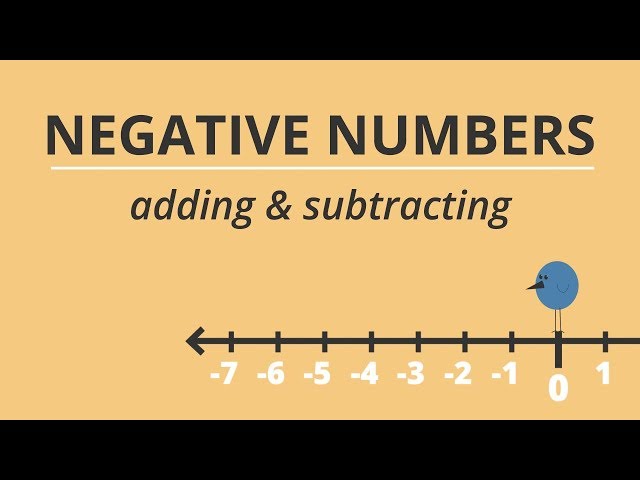
One simple chart that can be used to teach adding and subtracting negative integers is a number line.A number line is a horizontal line with numbers marked off at regular intervals. To add or subtract a negative integer, students can start at the zero point on the number line and then move the appropriate number of spaces to the left (for subtracting) or to the right (for adding).
For example, to add -5 to 3, students would start at 3 on the number line and then move 5 spaces to the left. This would bring them to -2, which is the sum of 3 and -5.
Another helpful diagram that can be used to teach adding and subtracting negative integers is a T-chart.A T-chart is a table with two columns, one for positive integers and one for negative integers. To add or subtract a negative integer, students can find the corresponding positive or negative integer in the other column and then add or subtract the two numbers.
For example, to subtract -5 from 3, students would find 5 in the positive integer column and then subtract it from 3. This would give them -2, which is the difference of 3 and -5.
Charts and diagrams can be valuable tools for teaching and learning mathematics. By providing a visual representation of mathematical concepts, charts and diagrams can help students to understand these concepts more deeply and to apply them to different situations.
Essential Aspects of “Adding and Subtracting Negative Integers Worksheet”
Adding and subtracting negative integers is a fundamental operation in mathematics. It is used in a variety of applications, from everyday calculations to solving complex equations. To perform these operations correctly, it is essential to understand the underlying concepts.
- Integers: Whole numbers, including positive numbers, negative numbers, and zero.
- Negative sign (-): Indicates that a number is less than zero.
- Addition: Combining two or more numbers to get their sum.
- Subtraction: Finding the difference between two numbers.
- Number line: A visual representation of numbers as points on a line.
- Rules for adding and subtracting negative integers: Specific rules that govern these operations.
- Applications: Real-world situations where adding and subtracting negative integers is used.
- Practice: Solving problems to develop proficiency in these operations.
These key aspects provide a comprehensive understanding of adding and subtracting negative integers. Worksheets that focus on these aspects can help students to develop a strong foundation in this important mathematical skill.
Integers
Integers are a fundamental concept in mathematics, and they play a vital role in adding and subtracting negative integers. Integers include positive numbers, negative numbers, and zero. Positive numbers are greater than zero, negative numbers are less than zero, and zero is neither positive nor negative.
- Positive integers represent quantities that are greater than zero, such as the number of apples in a basket or the distance traveled in a positive direction.
- Negative integers represent quantities that are less than zero, such as the temperature below zero or the amount of money owed.
- Zero represents the absence of quantity.
When adding and subtracting negative integers, it is important to remember that the negative sign indicates the direction of the number on the number line. Positive numbers are to the right of zero, and negative numbers are to the left of zero. To add a negative integer, move to the left on the number line. To subtract a negative integer, move to the right on the number line.
Understanding the concept of integers is essential for success in adding and subtracting negative integers. Worksheets that focus on this concept can help students to develop a strong foundation in this important mathematical skill.
Negative sign (-)
The negative sign (-) is a crucial component in understanding how to add and subtract negative integers. It indicates that a number is less than zero on the number line. This concept is fundamental when working with negative integers, as it determines the direction and magnitude of the number.
In an adding subtracting negative integers worksheet, the negative sign plays a vital role in guiding the mathematical operations. When adding a negative integer, the negative sign indicates that we are moving to the left on the number line. Conversely, when subtracting a negative integer, the negative sign tells us to move to the right. Understanding this concept is essential for performing these operations correctly.
For instance, consider the problem: 5 – (-3). The negative sign in front of the 3 indicates that we are subtracting a negative integer. To solve this, we move 3 units to the right on the number line, resulting in the answer 8. This demonstrates the practical significance of understanding the negative sign when adding and subtracting negative integers.
In conclusion, the negative sign (-) is a fundamental concept that underpins the operations of adding and subtracting negative integers. Worksheets that focus on this concept provide a valuable tool for students to develop their understanding and proficiency in this important mathematical skill.
Addition
In the context of adding and subtracting negative integers, addition plays a fundamental role as a core mathematical operation. Understanding addition is essential for comprehending how to combine negative integers and arrive at their sum.
An adding subtracting negative integers worksheet typically involves problems where learners are required to add or subtract negative integers to find the result. To solve these problems, a clear understanding of addition as the process of combining numbers to obtain their sum is paramount.
For instance, consider the problem: -5 + 3. To solve this, we add the absolute values of the numbers, which gives us 8. Since the first number is negative, the result is also negative, giving us the answer -8. This example highlights the importance of understanding addition as a foundational concept in working with negative integers.
In conclusion, addition serves as a critical component in adding and subtracting negative integers. Worksheets that focus on this concept provide a valuable tool for students to develop their understanding and proficiency in this important mathematical skill.
Subtraction
Subtraction plays a crucial role in the context of adding and subtracting negative integers, as it forms the foundation for understanding how to find the difference between two numbers, particularly when one or both numbers are negative.
- Understanding the concept of difference: Subtraction involves finding the difference between two numbers, which represents the amount by which one number exceeds or falls short of the other. In the context of negative integers, this concept is essential for determining the magnitude and direction of the result.
- Rules for subtracting negative integers: Worksheets on adding and subtracting negative integers often include problems that require learners to apply specific rules for subtracting negative integers. These rules guide students in determining the correct sign and magnitude of the result, ensuring a deeper understanding of the underlying mathematical concepts.
- Real-world applications: Subtraction of negative integers has practical applications in various fields, such as finance, physics, and engineering. Worksheets that incorporate real-world examples help students connect their learning to practical scenarios, fostering a deeper comprehension of the subject matter.
In summary, subtraction serves as a fundamental operation in the context of adding and subtracting negative integers. By understanding the concept of difference, applying the rules for subtracting negative integers, and exploring real-world applications, students can develop a strong foundation in this important mathematical skill.
Number line
The number line is a fundamental tool for understanding and performing operations with integers, including adding and subtracting negative integers. It provides a visual representation of numbers as points on a line, with positive numbers to the right of zero and negative numbers to the left. This visual representation makes it easier to understand the concepts of addition and subtraction of negative integers.
In an adding subtracting negative integers worksheet, the number line can be used to illustrate the operations and to help students visualize the results. For example, to add -5 to 3, students can start at 3 on the number line and then move 5 units to the left, landing on -2. This visual representation helps students to understand that adding a negative number is the same as moving to the left on the number line.
The number line is also helpful for understanding the concept of subtracting a negative integer. For example, to subtract -5 from 3, students can start at 3 on the number line and then move 5 units to the right, landing on 8. This visual representation helps students to understand that subtracting a negative number is the same as moving to the right on the number line.
The number line is an essential tool for understanding and performing operations with negative integers. By providing a visual representation of numbers, the number line makes it easier for students to understand the concepts of addition and subtraction of negative integers.
Rules for adding and subtracting negative integers
When adding and subtracting negative integers, specific rules must be followed to ensure accurate results. These rules form the foundation for solving problems involving negative integers and are crucial for understanding the underlying mathematical concepts.
- Rule 1: Adding two negative integers: When adding two negative integers, the result is a negative integer. The absolute value of the result is the sum of the absolute values of the two integers.
- Rule 2: Adding a positive and a negative integer: When adding a positive integer and a negative integer, the result is the difference between the two absolute values. The sign of the result is the same as the sign of the integer with the greater absolute value.
- Rule 3: Subtracting a negative integer: Subtracting a negative integer is the same as adding its opposite (positive) integer.
- Rule 4: Subtracting a positive integer: Subtracting a positive integer is the same as adding its opposite (negative) integer.
In an adding subtracting negative integers worksheet, these rules are applied to solve a variety of problems. Students are given problems involving negative integers and are required to use the appropriate rules to find the solution. This process helps students to develop a deeper understanding of the rules and how to apply them in different situations.
By understanding and applying the rules for adding and subtracting negative integers, students can develop proficiency in this important mathematical skill. Worksheets that focus on these rules provide a valuable tool for students to practice and improve their understanding of negative integers.
Applications
Negative integers play a significant role in various real-world applications. Incorporating these applications into adding and subtracting negative integers worksheets enhances the learning experience by demonstrating the practical relevance of mathematical concepts. By connecting classroom lessons to real-life scenarios, students gain a deeper understanding of the subject matter and develop critical thinking skills.
One common application of adding and subtracting negative integers is in finance, particularly when dealing with monetary gains and losses. For example, a bank statement may show a negative balance, indicating a debt or overdraft. Adding a positive deposit to this negative balance reduces the debt, while subtracting a positive withdrawal increases the debt. Worksheets can include problems related to calculating account balances based on deposits and withdrawals.
Negative integers are also used in physics to represent quantities such as temperature below zero or displacement in the opposite direction. In a science worksheet, students might be asked to calculate the change in temperature when a substance cools down or the distance traveled in the opposite direction after reversing course.
Furthermore, adding and subtracting negative integers is essential in engineering and construction. For instance, when calculating the net force acting on an object, engineers must consider both positive and negative forces. Similarly, in architecture, measurements below ground level are often represented using negative integers. Worksheets can include problems related to calculating the total force or the depth of a foundation.
By incorporating real-world applications into adding and subtracting negative integers worksheets, students can develop a comprehensive understanding of the subject matter. These applications demonstrate the practical significance of negative integers and foster a deeper appreciation for the role of mathematics in everyday life.
Practice
Practice is a crucial component of learning and plays a vital role in developing proficiency in adding and subtracting negative integers. Worksheets that incorporate practice problems provide students with opportunities to apply their knowledge and reinforce their understanding of the concepts.
Solving problems helps students develop fluency in performing operations with negative integers. By repeatedly working through problems, students strengthen their neural pathways and improve their ability to recall and apply the rules. This practice also helps them identify and correct errors, leading to a deeper understanding of the subject matter.
In real-life applications, proficiency in adding and subtracting negative integers is essential for tasks such as managing finances, calculating distances, and solving physics problems. For instance, a cashier must be able to accurately calculate change involving both positive and negative values, while a carpenter needs to understand how to measure and cut wood, taking into account measurements below zero.
Adding subtracting negative integers worksheets provide a structured environment for students to practice these operations and develop the necessary skills. By solving problems of varying difficulty, students can build confidence and become more proficient in this important mathematical concept.
An “adding and subtracting negative integers worksheet” is a valuable tool designed to help students develop a solid understanding of mathematical operations involving negative integers. These worksheets typically consist of a series of numerical problems that require learners to apply the rules of integer addition and subtraction.
Understanding how to add and subtract negative integers is essential for mastering more advanced mathematical concepts, such as algebra and calculus. It also has practical applications in various fields, including finance, physics, and engineering. By providing practice opportunities, these worksheets contribute to students’ overall mathematical proficiency and problem-solving abilities.
This article delves into the importance of adding and subtracting negative integers worksheets, exploring their benefits and providing guidance on how to use them effectively. We will also discuss strategies for addressing common challenges and misconceptions associated with this topic.
Frequently Asked Questions about Adding and Subtracting Negative Integers
Adding and subtracting negative integers can be a challenging concept for some learners. This FAQ section aims to address some common questions and misconceptions to enhance understanding.
Question 1: Why is it important to learn how to add and subtract negative integers?
Answer: Understanding negative integers is crucial for various mathematical operations, such as solving equations, simplifying expressions, and performing calculations in real-world applications.
Question 2: What is the rule for adding two negative integers?
Answer: When adding two negative integers, the result is a negative integer. The absolute value of the result is the sum of the absolute values of the two integers.
Question 3: How do I subtract a negative integer?
Answer: Subtracting a negative integer is the same as adding its opposite (positive) integer.
Question 4: What is a common misconception about subtracting negative integers?
Answer: A common misconception is that subtracting a negative integer is the same as adding a positive integer. This is not true. Subtracting a negative integer increases the value, while adding a positive integer decreases the value.
Question 5: How can I improve my skills in adding and subtracting negative integers?
Answer: Practice is key. Consistently solving problems involving negative integers helps strengthen understanding and develop proficiency.
Question 6: Where can I find additional resources to practice adding and subtracting negative integers?
Answer: Many online resources and textbooks provide practice problems and explanations. Additionally, seeking help from a teacher or tutor can be beneficial.
Summary of key takeaways or final thought:
Understanding how to add and subtract negative integers is essential for mathematical proficiency and problem-solving abilities. By addressing common misconceptions and providing strategies for improvement, this FAQ section aims to enhance learners’ confidence and understanding of this topic.
Transition to the next article section:
In the next section, we will explore practical applications of adding and subtracting negative integers in real-world scenarios.
Conclusion
Throughout this article, we have explored the importance of adding and subtracting negative integers, delving into the rules, applications, and strategies for solving problems involving negative integers. These operations form a crucial foundation for mathematical proficiency and problem-solving abilities.
Adding and subtracting negative integers play a vital role in various academic disciplines and real-world scenarios. From balancing equations in chemistry to calculating profit and loss in business, the ability to perform these operations accurately is essential. By understanding the concepts and practicing consistently, individuals can develop the skills necessary to navigate these mathematical challenges confidently.
As we continue to advance in the field of mathematics, the significance of adding and subtracting negative integers remains paramount. These operations serve as building blocks for more complex mathematical concepts and applications, empowering us to solve problems, make informed decisions, and contribute meaningfully to our world.
Youtube Video: