Ottila Juliane Kron
Charts and Diagrams for Subtraction Worksheets for Kindergarten
Charts and diagrams are valuable tools for teaching kindergarteners subtraction. They can help children visualize the concept of subtraction and make it more concrete. There are many different types of charts and diagrams that can be used to teach subtraction, but some of the most common include:
Number Lines: Number lines are a simple but effective way to teach subtraction. To create a number line, simply draw a line and label it with the numbers from 0 to 10. Then, have children use counters or other objects to represent the numbers being subtracted. For example, to subtract 3 from 5, children would place 5 counters on the number line and then move 3 of them to the left.
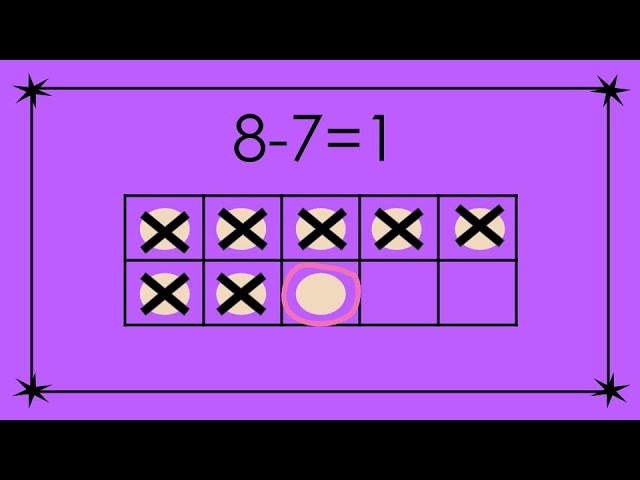
Ten Frames: Ten frames are another great way to teach subtraction. To create a ten frame, simply draw a rectangle and divide it into 10 smaller squares. Then, have children use counters or other objects to represent the numbers being subtracted. For example, to subtract 3 from 5, children would place 5 counters in the ten frame and then remove 3 of them.
Balance Scales: Balance scales are a fun and interactive way to teach subtraction. To create a balance scale, simply draw a line in the middle of a piece of paper and label it with the numbers from 0 to 10. Then, have children place counters or other objects on each side of the line to represent the numbers being subtracted. For example, to subtract 3 from 5, children would place 5 counters on one side of the line and 3 counters on the other side.
These are just a few of the many different types of charts and diagrams that can be used to teach subtraction to kindergarteners. By using these tools, you can help your students visualize the concept of subtraction and make it more concrete.
Benefits of Using Charts and Diagrams to Teach Subtraction
There are many benefits to using charts and diagrams to teach subtraction to kindergarteners. These benefits include:
- Charts and diagrams can help children visualize the concept of subtraction.
- Charts and diagrams can make subtraction more concrete for children.
- Charts and diagrams can help children develop their problem-solving skills.
- Charts and diagrams can make subtraction more fun and engaging for children.
Conclusion
Charts and diagrams are valuable tools for teaching subtraction to kindergarteners. By using these tools, you can help your students visualize the concept of subtraction, make it more concrete, and develop their problem-solving skills. So next time you’re teaching subtraction, reach for a chart or diagram!
Essential Aspects of Subtraction Worksheets for Kindergarten
Subtraction worksheets are an essential tool for teaching kindergarteners the concept of subtraction. They provide a concrete and visual way for children to learn how to subtract numbers. Here are eight key aspects of subtraction worksheets for kindergarten:
- Number Lines: Number lines help children visualize the subtraction process.
- Ten Frames: Ten frames help children understand the concept of subtraction as taking away.
- Balance Scales: Balance scales help children see subtraction as a balancing act.
- Real-World Problems: Real-world problems help children apply their subtraction skills to everyday situations.
- Fun and Engaging: Subtraction worksheets can be fun and engaging for children, making learning more enjoyable.
- Differentiated: Subtraction worksheets can be differentiated to meet the needs of all learners.
- Independent Practice: Subtraction worksheets provide children with an opportunity to practice their subtraction skills independently.
- Assessment: Subtraction worksheets can be used to assess children’s understanding of subtraction.
These eight key aspects are essential for creating effective subtraction worksheets for kindergarten. By incorporating these aspects into your worksheets, you can help your students learn subtraction in a fun and engaging way.
For example, you could create a subtraction worksheet that uses a number line to help children visualize the subtraction process. You could also create a subtraction worksheet that uses a ten frame to help children understand the concept of subtraction as taking away. Additionally, you could create a subtraction worksheet that uses a real-world problem to help children apply their subtraction skills to everyday situations.
By using a variety of subtraction worksheets, you can help your kindergarteners learn subtraction in a fun and engaging way.
Number Lines
Number lines are a simple but effective tool for teaching subtraction to kindergarteners. They provide a visual representation of the numbers involved in the subtraction process, which can help children to understand how subtraction works. For example, to subtract 3 from 5, a child can use a number line to visualize moving 3 steps to the left from the number 5. This helps the child to see that the result of the subtraction is 2.
Number lines are also helpful for teaching children how to solve subtraction problems mentally. By visualizing the subtraction process on a number line, children can develop a mental image of the numbers involved and the steps needed to solve the problem. This can help them to solve subtraction problems more quickly and efficiently.
In addition to being a valuable tool for teaching subtraction, number lines can also be used to assess children’s understanding of the concept. By asking children to solve subtraction problems using a number line, teachers can see whether or not the children understand how subtraction works and whether or not they are able to apply their knowledge to solve problems.
Overall, number lines are a valuable tool for teaching and learning subtraction. They provide a visual representation of the subtraction process, which can help children to understand how subtraction works and to develop mental strategies for solving subtraction problems.
Ten Frames
Ten frames are a powerful tool for teaching subtraction to kindergarteners. They provide a visual representation of the numbers involved in the subtraction process, which can help children to understand how subtraction works. For example, to subtract 3 from 5, a child can use a ten frame to visualize taking away 3 counters from a group of 5 counters. This helps the child to see that the result of the subtraction is 2.
-
Ten frames help children to understand the concept of subtraction as taking away.
When children use ten frames to subtract, they are literally taking away counters from a group. This helps them to visualize the subtraction process and to understand that subtraction is the opposite of addition.
-
Ten frames help children to develop mental strategies for solving subtraction problems.
By using ten frames to subtract, children can develop mental strategies for solving subtraction problems. For example, they can learn to subtract by counting back or by using the “make ten” strategy.
-
Ten frames can be used to differentiate instruction.
Ten frames can be used to differentiate instruction for students at different levels. For example, children who are struggling with subtraction can use ten frames to solve simple subtraction problems. Children who are ready for a challenge can use ten frames to solve more complex subtraction problems.
-
Ten frames can be used to assess children’s understanding of subtraction.
Ten frames can be used to assess children’s understanding of subtraction. By asking children to solve subtraction problems using ten frames, teachers can see whether or not the children understand how subtraction works and whether or not they are able to apply their knowledge to solve problems.
Overall, ten frames are a valuable tool for teaching and learning subtraction. They provide a visual representation of the subtraction process, which can help children to understand how subtraction works and to develop mental strategies for solving subtraction problems. Ten frames can also be used to differentiate instruction and to assess children’s understanding of subtraction.
Balance Scales
Balance scales are a valuable tool for teaching subtraction to kindergarteners. They provide a concrete and visual way for children to understand the concept of subtraction as a balancing act. When children use balance scales to subtract, they see that the numbers on each side of the scale must be equal in order for the scale to balance. This helps them to understand that subtraction is the process of taking away a certain number of objects from one side of the scale in order to make the scale balance again.
Balance scales can also be used to help children develop mental strategies for solving subtraction problems. For example, children can learn to use the “make ten” strategy to solve subtraction problems. To use the “make ten” strategy, children first add a number to one side of the scale to make ten. Then, they subtract the same number from the other side of the scale. This helps them to solve subtraction problems more quickly and efficiently.
Overall, balance scales are a valuable tool for teaching and learning subtraction. They provide a concrete and visual way for children to understand the concept of subtraction as a balancing act. Balance scales can also be used to help children develop mental strategies for solving subtraction problems. As a component of subtraction worksheets for kindergarten, balance scales can help children to visualize the subtraction process and to develop a deeper understanding of the concept of subtraction.
Real-World Problems
Real-world problems are an essential component of subtraction worksheets for kindergarten. They provide children with an opportunity to apply their subtraction skills to everyday situations, which helps them to develop a deeper understanding of the concept of subtraction. For example, a subtraction worksheet might ask children to solve the following problem: “There are 5 birds sitting on a branch. 3 of the birds fly away. How many birds are left on the branch?” This problem requires children to use their subtraction skills to determine the number of birds that are left on the branch.
Real-world problems also help children to develop their problem-solving skills. When children are presented with a real-world problem, they need to use their critical thinking skills to determine how to solve the problem. This can help them to develop their problem-solving abilities, which are essential for success in school and in life.
In addition, real-world problems can help children to see the relevance of subtraction in their everyday lives. When children see that subtraction can be used to solve real-world problems, they are more likely to understand the importance of the concept. This can help them to stay motivated and engaged in their learning.
Overall, real-world problems are an essential component of subtraction worksheets for kindergarten. They provide children with an opportunity to apply their subtraction skills to everyday situations, develop their problem-solving skills, and see the relevance of subtraction in their everyday lives.
Fun and Engaging
In the context of subtraction worksheets for kindergarten, incorporating elements of fun and engagement is crucial to foster a positive learning experience for young learners. By making subtraction worksheets enjoyable, children are more likely to stay motivated and engaged, leading to improved comprehension and retention of the concepts.
-
Gamification
Transforming subtraction practice into game-like activities, such as puzzles, mazes, or interactive online games, can add an element of fun and excitement to the learning process. This approach captures children’s attention and motivates them to complete the worksheets.
-
Visual Appeal
Incorporating visually appealing elements, such as colorful graphics, engaging characters, or interactive animations, can make subtraction worksheets more visually stimulating and enjoyable for young learners. Visuals can also help simplify complex concepts and make them more accessible.
-
Real-Life Scenarios
Presenting subtraction problems within the context of real-life scenarios can make them more relatable and meaningful for kindergarteners. Using examples from everyday life, such as sharing toys or distributing snacks, helps children connect subtraction to practical situations and develop a deeper understanding of its applications.
-
Variety and Differentiation
Providing a variety of subtraction worksheets with varying levels of difficulty allows teachers to differentiate instruction and cater to the diverse learning needs of kindergarteners. Children can progress at their own pace and select worksheets that challenge them appropriately, fostering a sense of accomplishment and continued engagement.
By incorporating these elements of fun and engagement into subtraction worksheets for kindergarten, educators can create a positive learning environment that promotes the development of foundational math skills while making the learning process enjoyable and memorable for young learners.
Differentiated
In the context of “subtraction worksheets kindergarten,” differentiation plays a crucial role in ensuring that all learners have access to appropriate and engaging learning experiences. Differentiation involves tailoring instruction to meet the diverse needs, learning styles, and readiness levels of students within a classroom.
Differentiated subtraction worksheets are essential for kindergarten classrooms because they allow teachers to provide targeted support and challenge to each learner. By considering factors such as students’ prior knowledge, cognitive abilities, and learning preferences, teachers can create worksheets that cater to the specific needs of individual students.
For example, students who are struggling with the concept of subtraction may benefit from worksheets that provide visual representations, such as number lines or ten frames. These visual aids can help students to understand the process of subtraction and develop a strong foundation for future learning.
On the other hand, students who are ready for a challenge may benefit from worksheets that involve more complex subtraction problems or require them to apply their subtraction skills to real-world scenarios. These worksheets can help students to extend their understanding of subtraction and develop higher-level thinking skills.
By differentiating subtraction worksheets, teachers can create a more inclusive and equitable learning environment that supports the success of all learners. When students are able to access instruction that is tailored to their individual needs, they are more likely to develop a deep understanding of subtraction and a positive attitude towards mathematics.
Independent Practice
In the context of “subtraction worksheets kindergarten,” independent practice plays a critical role in the development of subtraction skills and the fostering of mathematical independence among young learners. Subtraction worksheets designed for kindergarten provide children with ample opportunities to engage in independent practice, which is essential for reinforcing concepts, building fluency, and promoting deeper understanding.
-
Reinforcing Concepts
Subtraction worksheets provide children with repeated exposure to subtraction problems, allowing them to practice and reinforce the concepts they have learned in class. By working through a variety of subtraction problems independently, children solidify their understanding of the subtraction process and develop a strong foundation for future learning.
-
Building Fluency
Independent practice on subtraction worksheets helps children develop fluency in solving subtraction problems. As they work through multiple problems, they become more proficient in applying subtraction strategies and techniques, which leads to increased speed and accuracy in solving subtraction problems.
-
Promoting Deeper Understanding
Through independent practice on subtraction worksheets, children have the opportunity to explore subtraction concepts in a self-paced environment. They can take their time to work through problems, experiment with different strategies, and reflect on their solutions. This process promotes deeper understanding and helps children develop a more comprehensive grasp of subtraction.
-
Fostering Mathematical Independence
Subtraction worksheets designed for independent practice encourage children to take ownership of their learning. By working independently, children develop a sense of responsibility for their mathematical progress and learn to approach subtraction problems with confidence and independence.
In conclusion, the independent practice provided by subtraction worksheets is a crucial component of effective kindergarten mathematics instruction. By engaging in independent practice, children reinforce concepts, build fluency, promote deeper understanding, and foster mathematical independence, ultimately laying the foundation for future success in mathematics.
Assessment
In the context of “subtraction worksheets kindergarten,” assessment plays a vital role in evaluating children’s understanding of subtraction concepts and their ability to apply subtraction skills. Subtraction worksheets provide a valuable tool for teachers to assess children’s progress and identify areas where they may need additional support.
-
Diagnostic Assessment
Subtraction worksheets can be used to conduct diagnostic assessments to identify children’s strengths and weaknesses in subtraction. By analyzing their work on worksheets, teachers can pinpoint specific areas where children may need additional instruction or support. This information helps teachers tailor their instruction to meet the individual needs of each child.
-
Formative Assessment
Subtraction worksheets can be used for formative assessment purposes, providing ongoing feedback to children and teachers throughout the learning process. As children work through subtraction problems on worksheets, teachers can observe their strategies, identify common errors, and provide timely feedback to help children improve their understanding.
-
Summative Assessment
Subtraction worksheets can also be used for summative assessment to evaluate children’s overall understanding of subtraction at the end of a unit or lesson. These worksheets typically consist of more complex subtraction problems that require children to demonstrate their mastery of subtraction skills.
By incorporating subtraction worksheets into their assessment practices, kindergarten teachers can gain valuable insights into children’s understanding of subtraction and make informed decisions about how to support their learning. Assessment results from subtraction worksheets help teachers monitor children’s progress, adjust their instruction, and ensure that all children are developing a strong foundation in subtraction.
Subtraction worksheets for kindergarten are educational tools designed to help young learners develop their understanding of subtraction. These worksheets typically consist of a series of subtraction problems that children can solve using a variety of methods, such as counting backward, using number lines, or drawing pictures.
Subtraction worksheets are an important part of kindergarten mathematics instruction because they provide children with an opportunity to practice and reinforce their subtraction skills. By working through subtraction problems on worksheets, children can develop a deeper understanding of the concept of subtraction and become more proficient in solving subtraction problems.
In addition to providing practice and reinforcement, subtraction worksheets can also be used to assess children’s understanding of subtraction. By analyzing children’s work on subtraction worksheets, teachers can identify areas where children may need additional support and can adjust their instruction accordingly.
There are many different types of subtraction worksheets available, so teachers can choose worksheets that are appropriate for the skill level of their students. Some subtraction worksheets may focus on basic subtraction facts, while others may involve more complex subtraction problems. There are also subtraction worksheets that incorporate fun and engaging activities, such as games and puzzles.
Subtraction worksheets are a valuable tool for kindergarten teachers because they provide a variety of ways to teach and assess subtraction skills. By using subtraction worksheets, teachers can help their students develop a strong foundation in subtraction and prepare them for success in future mathematics courses.
FAQs about Subtraction Worksheets for Kindergarten
Subtraction worksheets are a valuable tool for teaching kindergarteners the concept of subtraction. They provide a concrete and visual way for children to learn how to subtract numbers. However, there are some common questions that parents and teachers may have about using subtraction worksheets in kindergarten.
Question 1: When should I start using subtraction worksheets with my kindergartener?
Answer: You can start using subtraction worksheets with your kindergartener once they have a basic understanding of numbers and counting. This is typically around the age of 4 or 5.
Question 2: How often should I use subtraction worksheets with my kindergartener?
Answer: You should use subtraction worksheets with your kindergartener as often as they need them to practice and reinforce their subtraction skills. This may vary depending on the individual child, but a good rule of thumb is to use subtraction worksheets at least once a week.
Question 3: What types of subtraction worksheets should I use with my kindergartener?
Answer: There are many different types of subtraction worksheets available, so you can choose worksheets that are appropriate for the skill level of your kindergartener. Some subtraction worksheets may focus on basic subtraction facts, while others may involve more complex subtraction problems. There are also subtraction worksheets that incorporate fun and engaging activities, such as games and puzzles.
Question 4: How can I help my kindergartener solve subtraction problems?
Answer: There are several ways you can help your kindergartener solve subtraction problems. One way is to use visual aids, such as number lines or counters. You can also help your kindergartener by breaking down the subtraction problem into smaller steps. For example, if your kindergartener is having trouble solving the problem 5 – 2, you can break it down into the following steps: 5 – 1 = 4, 4 – 1 = 3.
Question 5: What should I do if my kindergartener is struggling with subtraction?
Answer: If your kindergartener is struggling with subtraction, there are several things you can do to help. First, try to identify the specific area where your kindergartener is struggling. Once you have identified the problem area, you can focus on providing your kindergartener with additional practice and support in that area. You can also try using different teaching methods or materials to help your kindergartener understand the concept of subtraction.
Question 6: How can I make subtraction practice more fun for my kindergartener?
Answer: There are several ways you can make subtraction practice more fun for your kindergartener. One way is to use games and activities to teach subtraction. You can also make subtraction practice more fun by incorporating your kindergartener’s interests into the learning process. For example, if your kindergartener loves to play with cars, you can use cars to teach them about subtraction.
By following these tips, you can help your kindergartener learn subtraction in a fun and engaging way.
Summary: Subtraction worksheets are a valuable tool for teaching kindergarteners the concept of subtraction. By using subtraction worksheets, you can help your kindergartener develop a strong foundation in subtraction and prepare them for success in future mathematics courses.
Transition to the next article section: In the next section, we will discuss the benefits of using subtraction worksheets in kindergarten.
Conclusion
In conclusion, subtraction worksheets are a valuable tool for teaching kindergarteners the concept of subtraction. They provide a concrete and visual way for children to learn how to subtract numbers, and they can be used to reinforce concepts, build fluency, promote deeper understanding, and foster mathematical independence. By using subtraction worksheets in conjunction with other teaching methods, teachers can help their students develop a strong foundation in subtraction and prepare them for success in future mathematics courses.
However, it is important to remember that subtraction worksheets are just one tool in a teacher’s toolbox. They should be used in conjunction with other teaching methods, such as hands-on activities, games, and discussions. By using a variety of teaching methods, teachers can help their students learn subtraction in a fun and engaging way.
Youtube Video: