Ottila Juliane Kron
Chart and Diagram Examples for Kindergarten Addition and Subtraction Worksheets
Charts and diagrams are valuable tools for teaching kindergarten students addition and subtraction. They can help students visualize mathematical concepts, make connections between different representations of numbers, and develop problem-solving skills. Here are a few examples of charts and diagrams that can be used to teach kindergarten addition and subtraction:
Number line: A number line is a straight line with numbers marked at equal intervals. It can be used to represent addition and subtraction problems. For example, to solve the problem 5 + 3, students can start at the number 5 on the number line and count forward 3 spaces to land on the number 8. Ten-frame: A ten-frame is a 2×5 grid that can be used to represent numbers up to 10. It can be used to teach addition and subtraction by showing students how numbers can be broken down into smaller parts. For example, to solve the problem 7 – 4, students can use a ten-frame to represent the number 7 and then remove 4 counters to see that the answer is 3. Part-part-whole diagram: A part-part-whole diagram is a diagram that shows how a whole number can be broken down into two parts. It can be used to teach addition and subtraction by helping students understand the relationship between the whole and its parts. For example, to solve the problem 5 + 3, students can use a part-part-whole diagram to show that the whole number 8 is made up of the parts 5 and 3.
These are just a few examples of the many charts and diagrams that can be used to teach kindergarten addition and subtraction. By using these tools, teachers can help students develop a deeper understanding of mathematical concepts and improve their problem-solving skills.
Here are some of the benefits of using charts and diagrams to teach kindergarten addition and subtraction:
- Charts and diagrams can help students visualize mathematical concepts.
- Charts and diagrams can help students make connections between different representations of numbers.
- Charts and diagrams can help students develop problem-solving skills.
- Charts and diagrams can make learning addition and subtraction more fun and engaging.
If you are looking for ways to make teaching kindergarten addition and subtraction more effective, consider using charts and diagrams. These tools can help your students learn math in a fun and engaging way.
Essential Aspects of Kindergarten Addition and Subtraction Worksheets
Kindergarten addition and subtraction worksheets are an essential tool for teaching young children the basics of math. They provide a structured and engaging way for students to practice their skills and develop their understanding of mathematical concepts. Here are six key aspects of kindergarten addition and subtraction worksheets:
- Number recognition: Worksheets can help students learn to identify and write numbers.
- Counting: Worksheets can help students develop their counting skills.
- Addition: Worksheets can help students learn to add two or more numbers together.
- Subtraction: Worksheets can help students learn to subtract one number from another.
- Problem-solving: Worksheets can help students develop their problem-solving skills by presenting them with real-world problems to solve.
- Fine motor skills: Worksheets can help students develop their fine motor skills by requiring them to use pencils or crayons to write and draw.
These six aspects are all essential for kindergarten students to develop a strong foundation in math. By using addition and subtraction worksheets, teachers can help their students learn these important skills in a fun and engaging way.
For example, a worksheet might ask students to count the number of apples in a basket and then write the number on the line. This worksheet would help students develop their number recognition and counting skills. Another worksheet might ask students to solve a simple addition problem, such as 2 + 3. This worksheet would help students develop their addition skills. By providing students with a variety of worksheets, teachers can help them develop all of the essential skills they need to succeed in math.
Number recognition
Number recognition is a fundamental skill for kindergarten students. It is the ability to identify and write numbers, and it is essential for success in math. Kindergarten addition and subtraction worksheets can help students develop this important skill.
- Understanding the symbols: Worksheets can help students learn to recognize the symbols that represent numbers. By seeing numbers written in different fonts and sizes, students begin to understand that the symbol “5” always represents the number five, regardless of how it looks.
- Counting: Worksheets can help students develop their counting skills. By counting the objects in a picture or set, students learn to associate numbers with quantities.
- Writing numbers: Worksheets can help students practice writing numbers. By tracing numbers and writing them on their own, students develop the fine motor skills needed to write numbers legibly.
These are just a few of the ways that kindergarten addition and subtraction worksheets can help students develop their number recognition skills. By providing students with plenty of practice, teachers can help them build a strong foundation for success in math.
Counting
Counting is a fundamental skill for kindergarten students. It is the ability to determine the number of objects in a set, and it is essential for success in math. Kindergarten addition and subtraction worksheets can help students develop this important skill.
- Understanding the concept of quantity: Worksheets can help students understand the concept of quantity. By counting the objects in a picture or set, students learn that each object represents one, and that the total number of objects represents the quantity of the set.
- Developing one-to-one correspondence: Worksheets can help students develop one-to-one correspondence. This is the ability to match each object in a set to a number. By counting the objects in a set one-by-one and saying the number that corresponds to each object, students learn to match numbers to quantities.
- Recognizing number patterns: Worksheets can help students recognize number patterns. By counting sets of objects that increase or decrease by one, students learn to recognize number patterns and predict the next number in the sequence.
- Applying counting skills to real-world situations: Worksheets can help students apply their counting skills to real-world situations. By counting objects in their environment, such as toys, books, or crayons, students learn to use their counting skills to solve problems and make decisions.
These are just a few of the ways that kindergarten addition and subtraction worksheets can help students develop their counting skills. By providing students with plenty of practice, teachers can help them build a strong foundation for success in math.
Addition
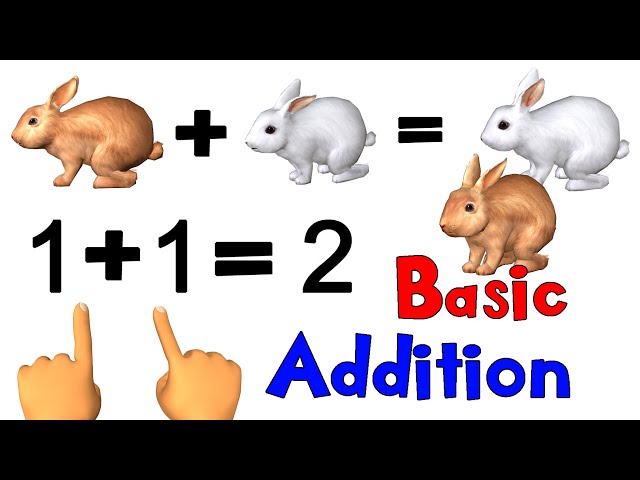
Addition is one of the most basic operations in mathematics, and it is essential for success in many areas of life. Kindergarten addition and subtraction worksheets can help students develop a strong foundation in addition by providing them with plenty of practice adding two or more numbers together.
- Understanding the concept of addition: Worksheets can help students understand the concept of addition. By adding two or more numbers together, students learn that the total is the sum of the parts.
- Developing number sense: Worksheets can help students develop their number sense. By adding numbers together, students learn about the relationships between numbers and how they can be combined to make new numbers.
- Applying addition skills to real-world situations: Worksheets can help students apply their addition skills to real-world situations. By adding objects together, such as toys, blocks, or crayons, students learn how to use addition to solve problems and make decisions.
These are just a few of the ways that kindergarten addition and subtraction worksheets can help students learn to add two or more numbers together. By providing students with plenty of practice, teachers can help them build a strong foundation for success in math.
Subtraction
Subtraction is the inverse operation of addition, and it is just as important for kindergarten students to learn. Subtraction worksheets can help students develop a strong foundation in subtraction by providing them with plenty of practice subtracting one number from another.
- Understanding the concept of subtraction: Worksheets can help students understand the concept of subtraction. By subtracting one number from another, students learn that the difference is the amount that is left over.
- Developing number sense: Worksheets can help students develop their number sense. By subtracting numbers from each other, students learn about the relationships between numbers and how they can be combined and separated to make new numbers.
- Applying subtraction skills to real-world situations: Worksheets can help students apply their subtraction skills to real-world situations. By subtracting objects from each other, such as toys, blocks, or crayons, students learn how to use subtraction to solve problems and make decisions.
These are just a few of the ways that kindergarten addition and subtraction worksheets can help students learn to subtract one number from another. By providing students with plenty of practice, teachers can help them build a strong foundation for success in math.
Problem-solving
Problem-solving is an essential skill for kindergarten students. It is the ability to identify a problem, generate solutions, and implement a solution to achieve a desired outcome. Kindergarten addition and subtraction worksheets can help students develop their problem-solving skills by providing them with opportunities to apply their math skills to real-world problems.
- Understanding the problem: Worksheets can help students understand the problem by providing them with clear and concise instructions. Students must be able to identify the problem, the goal, and the constraints in order to develop an effective solution.
- Generating solutions: Worksheets can help students generate solutions by providing them with a variety of problems to solve. Students must be able to think critically and creatively to come up with different ways to solve a problem.
- Implementing a solution: Worksheets can help students implement a solution by providing them with the opportunity to practice solving problems. Students must be able to follow instructions and apply their math skills to solve the problem.
- Evaluating the solution: Worksheets can help students evaluate the solution by providing them with feedback on their work. Students must be able to determine if their solution is correct and if it meets the goal of the problem.
By providing students with plenty of practice solving real-world problems, kindergarten addition and subtraction worksheets can help them develop their problem-solving skills. These skills will be essential for their success in math and in life.
Fine motor skills
Fine motor skills are the small movements that we make with our hands and fingers. These skills are essential for everyday activities such as writing, drawing, and eating. Kindergarten addition and subtraction worksheets can help students develop their fine motor skills by requiring them to use pencils or crayons to write and draw.
There are a number of ways that kindergarten addition and subtraction worksheets can help students develop their fine motor skills. First, these worksheets require students to hold a pencil or crayon correctly. This helps to strengthen the muscles in the fingers and hands. Second, these worksheets require students to make small, precise movements when writing and drawing. This helps to improve coordination and dexterity. Third, these worksheets often require students to color within the lines. This helps to improve eye-hand coordination.
The development of fine motor skills is important for kindergarten students for a number of reasons. First, fine motor skills are necessary for success in school. Students need to be able to hold a pencil correctly and write legibly in order to complete their schoolwork. Second, fine motor skills are necessary for everyday activities such as eating, dressing, and playing. Third, fine motor skills help children to develop their creativity and self-expression.
Kindergarten addition and subtraction worksheets are a valuable tool for helping students develop their fine motor skills. These worksheets provide students with the opportunity to practice writing and drawing, which are essential for the development of fine motor skills. By completing these worksheets, students can improve their coordination, dexterity, and eye-hand coordination.
Kindergarten addition and subtraction worksheets are educational tools designed to help kindergarten students develop their math skills, particularly in the areas of addition and subtraction. These worksheets typically feature a variety of activities, such as counting objects, solving simple addition and subtraction problems, and drawing pictures to represent mathematical concepts.
Kindergarten addition and subtraction worksheets offer numerous benefits for young learners. By engaging in these activities, students can improve their number recognition, counting skills, and understanding of basic mathematical operations. These worksheets also help to develop fine motor skills, problem-solving abilities, and critical thinking skills. Additionally, kindergarten addition and subtraction worksheets can provide a fun and interactive way for students to learn and practice math concepts.
The use of kindergarten addition and subtraction worksheets has a long history in early childhood education. For decades, these worksheets have been a staple in kindergarten classrooms, helping countless students to build a strong foundation in math. Today, kindergarten addition and subtraction worksheets continue to be an essential tool for kindergarten teachers, providing them with a valuable resource to support their students’ learning and development.
FAQs on Kindergarten Addition and Subtraction Worksheets
Kindergarten addition and subtraction worksheets are widely used in early childhood education to help students develop their math skills. Here are some frequently asked questions (FAQs) about these worksheets:
Question 1: What are the benefits of using kindergarten addition and subtraction worksheets?
Answer: Kindergarten addition and subtraction worksheets offer several benefits, including improving number recognition, counting skills, and understanding of basic mathematical operations. They also help develop fine motor skills, problem-solving abilities, and critical thinking skills. Additionally, these worksheets can provide a fun and interactive way for students to learn and practice math concepts.
Question 2: How can I incorporate kindergarten addition and subtraction worksheets into my teaching?
Answer: Kindergarten addition and subtraction worksheets can be easily incorporated into your teaching by using them as part of your math lessons. You can start by introducing simple addition and subtraction problems and gradually increase the difficulty level as students progress. You can also use these worksheets as a review tool or for extra practice.
Question 3: Are there any tips for making kindergarten addition and subtraction worksheets more effective?
Answer: Yes, here are some tips for making kindergarten addition and subtraction worksheets more effective:
- Choose worksheets that are appropriate for the skill level of your students.
- Make sure the instructions are clear and easy to understand.
- Provide students with plenty of opportunities to practice.
- Offer positive reinforcement for correct answers.
- Use a variety of worksheets to keep students engaged.
Question 4: How can I assess students’ progress using kindergarten addition and subtraction worksheets?
Answer: You can assess students’ progress using kindergarten addition and subtraction worksheets by observing their work, providing feedback, and administering quizzes or tests. By tracking students’ progress, you can identify areas where they need additional support and adjust your teaching accordingly.
Question 5: Are there any online resources where I can find kindergarten addition and subtraction worksheets?
Answer: Yes, there are many online resources where you can find kindergarten addition and subtraction worksheets. Some popular resources include Teachers Pay Teachers, Education.com, and Scholastic.
Question 6: What are some common misconceptions about kindergarten addition and subtraction worksheets?
Answer: One common misconception is that kindergarten addition and subtraction worksheets are only suitable for students who are already proficient in math. However, these worksheets can be beneficial for all students, regardless of their skill level. Another misconception is that kindergarten addition and subtraction worksheets are boring and repetitive. While some worksheets may be repetitive, there are many engaging and interactive worksheets available that can make learning fun and enjoyable.
In summary, kindergarten addition and subtraction worksheets are a valuable tool for teaching and learning basic math skills. By incorporating these worksheets into your teaching, you can help your students develop a strong foundation in mathematics.
Proceed to the next section for more information on kindergarten addition and subtraction worksheets.
Conclusion on Kindergarten Addition and Subtraction Worksheets
Kindergarten addition and subtraction worksheets play a crucial role in developing young learners’ mathematical abilities. They provide a structured and engaging platform for children to grasp foundational concepts like number recognition, counting, addition, subtraction, and problem-solving. By incorporating these worksheets into their teaching, kindergarten teachers can foster students’ mathematical thinking, enhance their fine motor skills, and cultivate their overall cognitive development.
As children progress through kindergarten and beyond, the complexity and sophistication of addition and subtraction problems will naturally increase. However, the foundation established through kindergarten addition and subtraction worksheets will serve as a cornerstone for their future mathematical endeavors. By providing children with ample opportunities to practice and refine these essential skills, we empower them to confidently tackle more advanced mathematical challenges in the years to come.
Youtube Video: