Ottila Juliane Kron
Chart and Diagram Examples of “Adding and Subtracting Positive and Negative Numbers Worksheet”
A worksheet on adding and subtracting positive and negative numbers can be a helpful tool for students to practice this important skill. Worksheets can include a variety of problems, from simple addition and subtraction to more complex word problems. They can also include helpful diagrams and charts to illustrate the concepts involved.
There are many different ways to create a worksheet on adding and subtracting positive and negative numbers. One simple way is to create a table with two columns, one for positive numbers and one for negative numbers. Students can then practice adding and subtracting the numbers in each column.
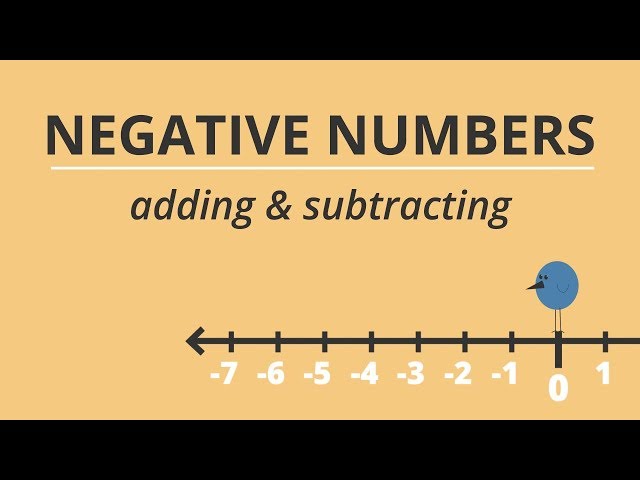
Another way to create a worksheet is to use a number line. Students can start at 0 and then add or subtract the given numbers to find the final answer. This method can be helpful for students who are struggling to understand the concept of positive and negative numbers.
Worksheets on adding and subtracting positive and negative numbers can be a valuable tool for students to practice this important skill. By using a variety of problems and diagrams, teachers can help students to understand the concepts involved and to improve their math skills.
Here are some of the benefits of using a chart or diagram when teaching adding and subtracting positive and negative numbers:
- Charts and diagrams can help students to visualize the concepts involved.
- They can help students to identify patterns and relationships.
- They can make it easier for students to understand the steps involved in solving problems.
Overall, charts and diagrams can be a valuable tool for teaching and learning adding and subtracting positive and negative numbers.
Essential Aspects of Adding and Subtracting Positive and Negative Numbers Worksheet
Adding and subtracting positive and negative numbers is a fundamental skill in mathematics. Worksheets can provide students with practice with this skill, and they can also help students to understand the concepts involved. Here are seven key aspects of adding and subtracting positive and negative numbers worksheets:
- Addition and Subtraction: Worksheets can include a variety of problems, from simple addition and subtraction to more complex word problems. This helps students to practice both basic operations and problem-solving skills.
- Positive and Negative Numbers: Worksheets can help students to identify and understand positive and negative numbers. This is an important concept for students to grasp, as it is essential for understanding many other mathematical operations.
- Number Lines: Worksheets can use number lines to illustrate the concepts of addition and subtraction of positive and negative numbers. This can help students to visualize the process and to understand how the numbers change.
- Real-World Applications: Worksheets can include real-world applications of adding and subtracting positive and negative numbers. This helps students to see how these concepts are used in everyday life.
- Problem-Solving: Worksheets can help students to develop problem-solving skills. By working through problems, students can learn to identify the steps involved in solving a problem and to apply their knowledge of adding and subtracting positive and negative numbers.
- Assessment: Worksheets can be used to assess students’ understanding of adding and subtracting positive and negative numbers. This can help teachers to identify areas where students need additional support.
- Differentiation: Worksheets can be differentiated to meet the needs of all students. For example, some worksheets can be more challenging, while others can be more basic. This allows teachers to tailor instruction to the individual needs of their students.
Overall, adding and subtracting positive and negative numbers worksheets are a valuable resource for teaching and learning this important skill. By incorporating these key aspects into their worksheets, teachers can help students to develop a deep understanding of this topic.
Addition and Subtraction
Adding and subtracting positive and negative numbers is an essential skill in mathematics. Worksheets can provide students with practice with this skill, and they can also help students to understand the concepts involved. One of the key aspects of adding and subtracting positive and negative numbers worksheets is that they can include a variety of problems, from simple addition and subtraction to more complex word problems. This helps students to practice both basic operations and problem-solving skills.
For example, a simple addition problem might ask students to add two positive numbers, such as 5 + 7. A more complex word problem might ask students to find the total cost of a purchase, including tax. To solve this problem, students would need to add the cost of the item to the amount of tax. By practicing with a variety of problems, students can develop a strong understanding of how to add and subtract positive and negative numbers.
In addition to practicing basic operations, adding and subtracting positive and negative numbers worksheets can also help students to develop problem-solving skills. Word problems require students to read and understand a problem, identify the relevant information, and then apply their mathematical skills to solve the problem. By working through word problems, students can learn to think critically and to apply their knowledge of mathematics to real-world situations.
Overall, adding and subtracting positive and negative numbers worksheets are a valuable resource for teaching and learning this important skill. By incorporating a variety of problems, worksheets can help students to practice both basic operations and problem-solving skills.
Positive and Negative Numbers
Positive and negative numbers are essential concepts in mathematics. They are used to represent quantities that can be either greater than or less than zero. For example, a positive number might represent a profit, while a negative number might represent a loss. Understanding positive and negative numbers is essential for understanding many other mathematical operations, such as addition, subtraction, multiplication, and division.
Adding and subtracting positive and negative numbers worksheets can help students to develop a strong understanding of these concepts. By working through problems, students can learn to identify positive and negative numbers, and to perform operations with them correctly. This is an important skill for students to have, as it is essential for success in mathematics and in many other fields.
For example, in the field of finance, positive and negative numbers are used to represent profits and losses. A positive number represents a profit, while a negative number represents a loss. Understanding how to add and subtract positive and negative numbers is essential for anyone who works in finance.
In conclusion, positive and negative numbers are essential concepts in mathematics and in many other fields. Adding and subtracting positive and negative numbers worksheets can help students to develop a strong understanding of these concepts. This is an important skill for students to have, as it is essential for success in mathematics and in many other fields.
Number Lines
Number lines are a valuable tool for teaching and learning about adding and subtracting positive and negative numbers. They provide a visual representation of the numbers and the operations being performed, which can help students to understand the concepts involved. Worksheets that incorporate number lines can be particularly helpful for students who are struggling to grasp these concepts.
- Concrete Representation: Number lines provide a concrete representation of the numbers and the operations being performed. This can help students to visualize the process and to understand how the numbers change. For example, when adding two positive numbers, the number line shows how the numbers are combined to create a larger number. When subtracting two numbers, the number line shows how the smaller number is taken away from the larger number to create a smaller number.
- Understanding of Positive and Negative Numbers: Number lines can help students to understand the concept of positive and negative numbers. Positive numbers are represented to the right of zero on the number line, while negative numbers are represented to the left of zero. This visual representation can help students to see the relationship between positive and negative numbers and to understand how they are used in mathematical operations.
- Solving Addition and Subtraction Problems: Number lines can be used to solve addition and subtraction problems. By moving along the number line, students can add or subtract the numbers involved in the problem. This can help students to develop a deeper understanding of the operations and to solve problems more efficiently.
Overall, number lines are a valuable tool for teaching and learning about adding and subtracting positive and negative numbers. Worksheets that incorporate number lines can be particularly helpful for students who are struggling to grasp these concepts. By providing a visual representation of the numbers and the operations being performed, number lines can help students to understand the concepts involved and to develop the skills necessary to solve problems.
Real-World Applications
Adding and subtracting positive and negative numbers is a skill that is used in many different real-world applications. For example, it is used in:
- Finance: Adding and subtracting positive and negative numbers is used to calculate profits and losses, as well as to track income and expenses.
- Science: Adding and subtracting positive and negative numbers is used to measure temperature, velocity, and other physical quantities.
- Everyday life: Adding and subtracting positive and negative numbers is used to calculate change, to compare temperatures, and to solve many other everyday problems.
By including real-world applications in adding and subtracting positive and negative numbers worksheets, teachers can help students to see the relevance of this skill and to understand how it is used in everyday life.
Problem-Solving
Adding and subtracting positive and negative numbers is a fundamental skill in mathematics. Worksheets can provide students with practice with this skill, and they can also help students to develop problem-solving skills. Problem-solving is an essential skill in many different areas of life, and it is important for students to develop this skill at a young age.
- Understanding the Problem: The first step in solving a problem is to understand the problem. This means reading the problem carefully and identifying the important information. Once the student understands the problem, they can begin to develop a plan for solving it.
- Creating a Plan: Once the student understands the problem, they can begin to create a plan for solving it. This may involve breaking the problem down into smaller steps, or it may involve identifying the mathematical operations that need to be used.
- Solving the Problem: Once the student has a plan, they can begin to solve the problem. This may involve using mathematical operations, or it may involve using other problem-solving strategies.
- Checking the Solution: Once the student has solved the problem, they should check their solution to make sure that it is correct. This may involve plugging the solution back into the original problem, or it may involve using another method to check the answer.
Adding and subtracting positive and negative numbers worksheets can help students to develop problem-solving skills by providing them with practice with solving problems that involve these operations. By working through these problems, students can learn to identify the steps involved in solving a problem and to apply their knowledge of mathematics to solve problems.
Assessment
Assessing students’ understanding of adding and subtracting positive and negative numbers is an important part of teaching mathematics. Worksheets can be a valuable tool for assessment, as they can provide teachers with information about students’ strengths and weaknesses. This information can then be used to provide targeted instruction to help students improve their understanding.
- Diagnostic Assessment: Worksheets can be used to conduct diagnostic assessments of students’ understanding of adding and subtracting positive and negative numbers. This information can help teachers to identify students who are struggling with these concepts and to provide them with the necessary support.
- Formative Assessment: Worksheets can also be used for formative assessment, which is an ongoing assessment of students’ progress and understanding. This information can be used to adjust instruction and to provide students with feedback on their progress.
- Summative Assessment: Worksheets can also be used for summative assessment, which is an assessment of students’ overall understanding of a topic. This information can be used to evaluate students’ learning and to make decisions about their placement in future math classes.
Overall, worksheets are a valuable tool for assessing students’ understanding of adding and subtracting positive and negative numbers. By using worksheets, teachers can identify students who are struggling with these concepts and provide them with the necessary support. Worksheets can also be used to track students’ progress and to make decisions about their placement in future math classes.
Differentiation
When it comes to teaching adding and subtracting positive and negative numbers, differentiation is key. Some students may need more practice with the basics, while others may be ready for more challenging problems. By differentiating worksheets, teachers can ensure that all students are challenged and supported appropriately.
- Levels of Difficulty: Worksheets can be differentiated by level of difficulty. For example, some worksheets may focus on basic addition and subtraction of positive and negative numbers, while others may include more complex problems, such as word problems or problems that require students to apply their understanding of the number line.
- Types of Problems: Worksheets can also be differentiated by the types of problems that they include. For example, some worksheets may focus on one type of problem, such as adding two positive numbers or subtracting a negative number from a positive number. Other worksheets may include a variety of problem types, which can help students to develop a more well-rounded understanding of adding and subtracting positive and negative numbers.
- Amount of Support: Worksheets can also be differentiated by the amount of support that they provide. For example, some worksheets may include step-by-step instructions or worked examples, while others may be more open-ended and require students to think more independently. The amount of support that a worksheet provides should be based on the needs of the students who will be using it.
By differentiating worksheets, teachers can ensure that all students have the opportunity to learn and practice adding and subtracting positive and negative numbers at their own pace. This can help to improve student engagement and achievement.
Adding and Subtracting Positive and Negative Numbers Worksheet
An adding and subtracting positive and negative numbers worksheet is a valuable tool for students to practice this important mathematical skill. It provides a structured format for students to work through a series of problems, allowing them to develop their understanding of the concepts involved and to improve their computational accuracy.
Adding and subtracting positive and negative numbers is a fundamental skill in mathematics that is used in a wide range of applications, from everyday calculations to solving complex equations. Worksheets provide students with an opportunity to practice this skill in a systematic way, helping them to build confidence and fluency.
Worksheets can be used in a variety of ways to support student learning. They can be used as a warm-up activity to review previously learned concepts, as a practice activity to reinforce new skills, or as an assessment to evaluate student understanding.
FAQs on Adding and Subtracting Positive and Negative Numbers
Adding and subtracting positive and negative numbers is a fundamental skill in mathematics that is used in a wide range of applications. It is important for students to develop a strong understanding of this concept in order to succeed in mathematics and in many other fields.
Question 1: What is the difference between a positive number and a negative number?
A positive number is a number that is greater than zero, while a negative number is a number that is less than zero. Positive numbers are often used to represent quantities that are increasing or moving in a positive direction, while negative numbers are often used to represent quantities that are decreasing or moving in a negative direction.
Question 2: How do you add two positive numbers?
To add two positive numbers, simply add their values. For example, 3 + 5 = 8.
Question 3: How do you add a positive number and a negative number?
To add a positive number and a negative number, subtract the absolute value of the negative number from the positive number. For example, 5 + (-3) = 2.
Question 4: How do you subtract two positive numbers?
To subtract two positive numbers, subtract the smaller number from the larger number. For example, 7 – 3 = 4.
Question 5: How do you subtract a negative number from a positive number?
To subtract a negative number from a positive number, add the absolute value of the negative number to the positive number. For example, 6 – (-4) = 10.
Question 6: How do you subtract two negative numbers?
To subtract two negative numbers, subtract the absolute value of the smaller number from the absolute value of the larger number. Then, add a negative sign to the result. For example, -7 – (-3) = -4.
These are just a few of the basic rules for adding and subtracting positive and negative numbers. For more information, please consult a math textbook or online resource.
Summary of key takeaways or final thought
Adding and subtracting positive and negative numbers is a fundamental skill in mathematics that is used in a wide range of applications. It is important for students to develop a strong understanding of this concept in order to succeed in mathematics and in many other fields. By practicing the rules for adding and subtracting positive and negative numbers, students can develop the skills they need to solve a variety of mathematical problems.
Transition to the next article section
In the next section, we will discuss some of the common mistakes that students make when adding and subtracting positive and negative numbers. We will also provide some tips for helping students to avoid these mistakes.
Conclusion on Adding and Subtracting Positive and Negative Numbers Worksheets
Worksheets on adding and subtracting positive and negative numbers are an essential tool for students to practice this important mathematical skill. These worksheets can help students to develop a deep understanding of the concepts involved, to improve their computational accuracy, and to apply their skills to solve real-world problems.
In this article, we have explored the various aspects of adding and subtracting positive and negative numbers worksheets, including their benefits, how to create them, and how to use them effectively in the classroom. We have also provided a number of resources that teachers can use to find and create worksheets that meet the needs of their students.
Adding and subtracting positive and negative numbers is a fundamental skill that students need to master in order to succeed in mathematics. By using worksheets, teachers can help students to develop the skills and confidence they need to solve a variety of mathematical problems.
Youtube Video: