Ottila Juliane Kron
Atomic Structure Chart
The atomic structure chart is a diagram that shows the arrangement of protons, neutrons, and electrons in an atom. This chart can be used to teach students about the structure of atoms and how they interact with each other. It can also be used to help students understand the periodic table of elements.
To create an atomic structure chart, you will need the following materials:
- A piece of paper
- A pencil
- A ruler
- A protractor
Once you have gathered your materials, you can follow these steps to create your chart:
- Draw a circle in the center of your paper. This circle will represent the nucleus of the atom.
- Draw a line through the center of the circle. This line will represent the axis of the atom.
- Draw a series of circles around the nucleus. These circles will represent the electron shells.
- Label the electron shells with the corresponding energy levels.
- Draw a series of dots within each electron shell. These dots will represent the electrons.
Your atomic structure chart is now complete. You can use this chart to teach students about the structure of atoms and how they interact with each other.
Here are some of the benefits of using an atomic structure chart:
- It can help students to visualize the structure of atoms.
- It can help students to understand how electrons are arranged in atoms.
- It can help students to understand the periodic table of elements.
The atomic structure chart is a valuable tool for teaching students about the structure of atoms. It is a simple and effective way to help students visualize and understand this complex topic.
The Structure of Atom Worksheet
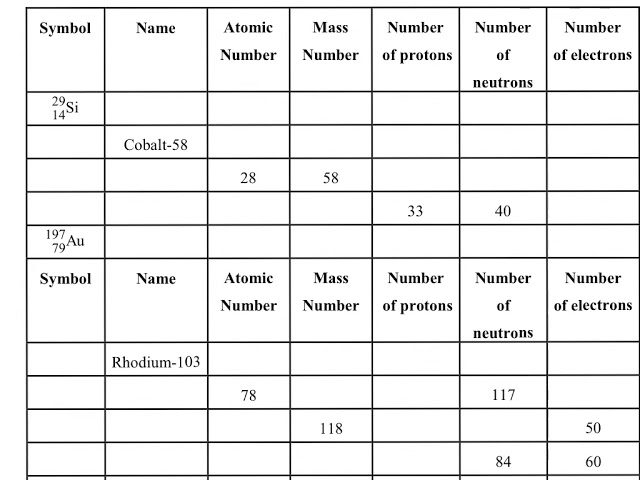
The structure of an atom is a fundamental concept in chemistry. It describes the arrangement of protons, neutrons, and electrons within an atom. Understanding the structure of atoms is essential for comprehending their behavior and properties.
- Nucleus: The central core of an atom, containing protons and neutrons.
- Electron cloud: The region surrounding the nucleus where electrons are found.
- Electron shells: Discrete energy levels within the electron cloud.
- Atomic number: The number of protons in an atom, determining its elemental identity.
- Mass number: The sum of protons and neutrons in an atom, indicating its isotopic composition.
- Isotopes: Atoms of the same element with varying numbers of neutrons.
- Valence electrons: Electrons in the outermost shell, responsible for chemical bonding.
- Electron configuration: The distribution of electrons across different energy levels.
These key aspects provide a comprehensive overview of the structure of atoms. They are interconnected and essential for understanding atomic properties, chemical reactions, and the behavior of matter. By studying these aspects, students can gain a deeper understanding of the fundamental building blocks of our universe.
Nucleus
The nucleus is a fundamental component of the structure of an atom. It is the central core of the atom, containing protons and neutrons, and is responsible for the atom’s identity and many of its properties. The number of protons in the nucleus determines the element to which the atom belongs, while the number of neutrons affects its isotopic composition.
In the context of an atomic structure worksheet, understanding the nucleus is crucial for comprehending the overall structure of the atom. Worksheets often include exercises that require students to identify or describe the nucleus, its components, and its role within the atom. By studying the nucleus, students can gain insights into the atom’s stability, nuclear reactions, and the behavior of radioactive isotopes.
For example, one common exercise in atomic structure worksheets involves determining the atomic number and mass number of an atom based on its nuclear composition. This exercise reinforces the understanding of the nucleus as the defining factor of an atom’s identity and isotopic composition. Additionally, worksheets may include questions about nuclear decay and the role of the nucleus in nuclear reactions, highlighting the practical significance of understanding nuclear structure.
In summary, the nucleus is a vital component of the structure of an atom worksheet. It provides the foundation for understanding atomic identity, isotopic composition, and nuclear processes. By studying the nucleus, students can develop a comprehensive understanding of the atom and its behavior.
Electron cloud
The electron cloud is a crucial aspect of the structure of an atom and plays a significant role in various exercises and concepts covered in atomic structure worksheets.
- Electron distribution and energy levels: Worksheets often include exercises that require students to understand the distribution of electrons within the electron cloud. By studying the electron cloud, students can comprehend the concept of energy levels and how electrons occupy specific orbitals based on their energy.
- Atomic orbitals and shapes: Atomic structure worksheets may also delve into the shapes and orientations of electron orbitals within the electron cloud. This knowledge is essential for understanding the chemical bonding behavior of atoms and predicting their interactions with other atoms.
- Electron configuration and properties: By analyzing the electron cloud, students can determine the electron configuration of an atom, which influences its chemical properties and behavior. Worksheets often include exercises that reinforce the relationship between electron configuration and the periodic table.
- Quantum mechanics and wave-particle duality: The electron cloud is a manifestation of the wave-particle duality of electrons, a fundamental concept in quantum mechanics. Worksheets may introduce students to this concept and explore how it affects the behavior of electrons within the electron cloud.
In summary, the electron cloud is an integral part of the structure of an atom and provides valuable insights into the behavior and properties of atoms. By studying the electron cloud through atomic structure worksheets, students can develop a comprehensive understanding of atomic structure and its implications in chemistry.
Electron shells
Electron shells, as discrete energy levels within the electron cloud, hold significant importance in the study of atomic structure and its representation in atomic structure worksheets.
Understanding electron shells is pivotal for comprehending the organization and behavior of electrons within an atom. Worksheets often include exercises that require students to identify, describe, and predict the arrangement of electrons in different shells based on their energy levels. By studying electron shells, students can grasp the concept of electron configurations and their influence on various atomic properties.
Moreover, electron shells play a crucial role in chemical bonding and reactivity. Worksheets may explore how the number and arrangement of electrons in the outermost shell determine an atom’s chemical behavior and its ability to form bonds with other atoms. This understanding is essential for predicting and explaining the formation of molecules and compounds.
In summary, electron shells are a fundamental component of the structure of atom worksheets. They provide insights into the organization and behavior of electrons, influencing atomic properties, chemical bonding, and reactivity. By studying electron shells, students can develop a comprehensive understanding of atomic structure and its implications in chemistry.
Atomic number
The atomic number is a fundamental property of an atom and holds significant importance in the context of atomic structure worksheets. It represents the number of protons within the atom’s nucleus, which in turn determines the element to which the atom belongs. Understanding the concept of atomic number is crucial for comprehending the organization and behavior of elements within the periodic table.
In atomic structure worksheets, exercises often require students to identify or determine the atomic number of an atom based on its electronic configuration or other given information. By understanding the relationship between atomic number and elemental identity, students can develop a deeper comprehension of the periodic table and the properties of different elements.
Moreover, the atomic number plays a vital role in predicting the chemical behavior and reactivity of atoms. Worksheets may include exercises that explore how the atomic number influences the number of valence electrons, which in turn affects the atom’s ability to form chemical bonds. This understanding is essential for predicting and explaining the formation of molecules and compounds, as well as the chemical reactions between different elements.
In summary, the atomic number is an integral component of the structure of atom worksheets. It provides insights into the elemental identity, organization, and behavior of atoms. By studying the atomic number, students can develop a comprehensive understanding of atomic structure and its implications in chemistry.
Mass number
The mass number is a crucial aspect of the structure of atom worksheet as it provides insights into the isotopic composition of an atom. The isotopic composition refers to the different forms of an element that exist due to variations in the number of neutrons within their nuclei. Understanding the mass number is essential for comprehending the concept of isotopes and their properties.
In atomic structure worksheets, exercises often require students to calculate the mass number of an atom based on its atomic number and the number of neutrons present. This understanding helps students recognize that atoms of the same element can have different mass numbers, leading to the formation of isotopes. Worksheets may also explore the relationship between mass number and the stability of isotopes, highlighting the impact of neutron-to-proton ratio on nuclear stability.
Furthermore, the mass number plays a significant role in determining the physical and chemical properties of isotopes. Worksheets may include exercises that investigate how mass number influences the atomic mass of an element and its behavior in chemical reactions. This understanding is essential for predicting the properties of different isotopes and their applications in various fields, such as medicine, industry, and research.
In summary, the mass number is an integral component of the structure of atom worksheets. It provides insights into the isotopic composition, stability, and properties of atoms. By studying the mass number, students can develop a comprehensive understanding of atomic structure and its implications in chemistry and other scientific disciplines.
Isotopes
In the context of atomic structure worksheets, understanding isotopes is crucial for comprehending the diversity and properties of elements. Isotopes are atoms of the same element that have the same atomic number but different mass numbers due to variations in the number of neutrons within their nuclei. This concept is explored in atomic structure worksheets to provide insights into the composition and behavior of different isotopes.
Worksheets often include exercises that require students to identify and compare isotopes based on their atomic numbers and mass numbers. By studying isotopes, students can recognize that atoms of the same element can exhibit different physical and chemical properties due to their varying neutron compositions. This understanding is essential for predicting the behavior of elements in various chemical reactions and applications.
For instance, worksheets may explore the isotopes of hydrogen, which include protium, deuterium, and tritium. These isotopes have the same atomic number (1), indicating that they are all hydrogen atoms. However, they differ in their mass numbers due to varying numbers of neutrons. Protium has no neutrons, deuterium has one neutron, and tritium has two neutrons. Understanding these isotopes is important in fields such as nuclear chemistry, where isotopes are used as tracers or in nuclear reactions.
In summary, isotopes are a fundamental component of the structure of atom worksheets. They provide insights into the diversity and properties of elements, enabling students to understand the composition and behavior of different isotopes. By studying isotopes, students can develop a comprehensive understanding of atomic structure and its implications in various scientific disciplines, including chemistry, physics, and nuclear science.
Valence Electrons
In the context of atomic structure, valence electrons play a crucial role in determining the chemical properties and behavior of atoms. They are the electrons that occupy the outermost electron shell of an atom and are responsible for forming chemical bonds with other atoms.
- Chemical bonding: Valence electrons are directly involved in the formation of chemical bonds between atoms. By understanding the number and arrangement of valence electrons, students can predict the types of bonds that an atom can form and its chemical reactivity.
- Periodic trends: The number of valence electrons is a key factor in determining the position of an element in the periodic table. By studying valence electrons, students can understand the periodic trends in atomic properties, such as electronegativity and ionization energy.
- Reactivity: The number of valence electrons influences the reactivity of an atom. Atoms with a greater number of valence electrons tend to be more reactive, as they are more likely to participate in chemical reactions.
- Molecular structure: Valence electrons are responsible for the formation of molecular orbitals in covalent molecules. By understanding the valence electrons of the constituent atoms, students can predict the geometry and properties of molecules.
In summary, the study of valence electrons is essential for comprehending the chemical properties and behavior of atoms. By incorporating exercises and concepts related to valence electrons in atomic structure worksheets, students can develop a deeper understanding of chemical bonding, periodic trends, reactivity, and molecular structure.
Electron Configuration
Electron configuration plays a pivotal role in the structure of atom worksheets as it provides a detailed understanding of how electrons are arranged within an atom. This arrangement influences various atomic properties and chemical behavior, making it a crucial concept for students to grasp.
In atomic structure worksheets, exercises often involve determining the electron configuration of an atom based on its atomic number or vice versa. By studying electron configuration, students learn about the Aufbau principle, Hund’s rule, and the periodic trends in electron configuration. This knowledge enables them to predict the chemical properties of elements, their position in the periodic table, and their reactivity.
For instance, understanding electron configuration is essential for comprehending the formation of chemical bonds. Atoms with similar electron configurations tend to exhibit similar chemical properties, as they have the same number of valence electrons. Valence electrons are the electrons in the outermost energy level, and they determine the atom’s bonding behavior.
Moreover, electron configuration plays a crucial role in various fields of science and technology. In solid-state physics, it helps explain the electrical and thermal conductivity of materials. In coordination chemistry, it aids in understanding the bonding and geometry of complex ions. Additionally, electron configuration is essential for interpreting spectroscopic data, which is used in analytical chemistry and astrophysics.
In summary, electron configuration is a fundamental aspect of the structure of atom worksheets. It provides insights into the arrangement of electrons within an atom, influencing its chemical properties, bonding behavior, and position in the periodic table. Understanding electron configuration is not only crucial for academic pursuits but also has practical applications in diverse scientific fields.
The structure of atom worksheet is a valuable educational tool that visually represents the fundamental components and arrangement of an atom. It serves as a comprehensive diagram that details the atom’s nucleus, electrons, and their respective energy levels.
Atomic structure worksheets play a crucial role in enhancing students’ understanding of chemistry and physics concepts. By providing a visual representation of atomic structure, these worksheets facilitate a deeper comprehension of atomic models, electron configurations, and the periodic table. Moreover, they promote critical thinking skills as students analyze and interpret the arrangement of subatomic particles within an atom.
Historically, atomic structure worksheets have evolved alongside scientific discoveries and advancements in our understanding of atomic physics. They have been instrumental in shaping our current knowledge of atomic structure and continue to be an essential resource for students and educators alike.
Frequently Asked Questions about the Structure of Atom Worksheet
The structure of atom worksheet is a valuable tool for students learning about the fundamental components and arrangement of atoms. Here are some frequently asked questions to clarify common concerns or misconceptions:
Question 1: What is the purpose of an atomic structure worksheet?
Answer: An atomic structure worksheet provides a visual representation of an atom, helping students understand the arrangement of protons, neutrons, and electrons. It reinforces concepts related to atomic models, electron configurations, and the periodic table.
Question 2: How can atomic structure worksheets enhance student learning?
Answer: By presenting atomic structure in a visual format, worksheets make complex concepts more accessible. They encourage students to analyze and interpret the arrangement of subatomic particles, fostering critical thinking skills.
Question 3: How have atomic structure worksheets evolved over time?
Answer: Atomic structure worksheets have evolved alongside scientific discoveries and advancements in our understanding of atomic physics. They reflect the latest scientific knowledge and incorporate current atomic models and theories.
Question 4: What are the different types of atomic structure worksheets available?
Answer: Worksheets can vary in complexity and focus, catering to different grade levels and learning objectives. Some common types include labeling worksheets, fill-in-the-blank exercises, and problem-solving activities.
Question 5: How can I incorporate atomic structure worksheets into my teaching?
Answer: Worksheets can be used as a supplement to classroom lessons, homework assignments, or review materials. They provide a flexible resource for reinforcing key concepts and assessing student understanding.
Question 6: Where can I find high-quality atomic structure worksheets?
Answer: Many reputable educational websites and publishers offer a range of atomic structure worksheets. It’s recommended to choose worksheets that align with your curriculum and learning objectives.
Summary: Atomic structure worksheets are valuable tools for enhancing student understanding of atomic structure and related concepts. They provide a visual representation of atoms, promote critical thinking skills, and can be easily incorporated into various teaching strategies.
Transition to the next article section: For further exploration of atomic structure, let’s delve into the historical evolution of the atomic model, tracing its development from ancient philosophies to modern scientific theories.
Conclusion
The structure of atom worksheet has proven to be an enduring educational tool, facilitating students’ comprehension of the fundamental building blocks of matter. Through visual representations and interactive exercises, these worksheets make complex atomic concepts accessible and engaging.
As our understanding of atomic structure continues to evolve, so too will the worksheets designed to teach this subject. With the advent of new technologies and pedagogical approaches, we can expect even more innovative and effective atomic structure worksheets in the future.
In the meantime, the traditional atomic structure worksheet remains a valuable resource for educators and students alike. Its simplicity, flexibility, and effectiveness have ensured its continued relevance in the ever-changing landscape of science education.
Youtube Video: