Ottila Juliane Kron
Adding and Subtracting Fractions with Unlike Denominators Worksheets
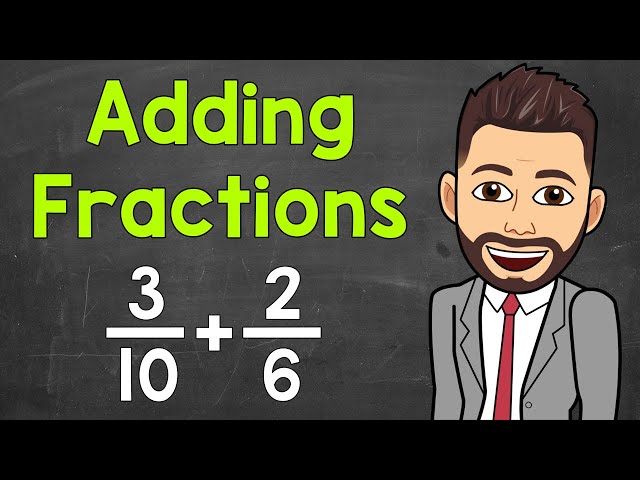
This chart provides a step-by-step guide for creating adding and subtracting fractions with unlike denominators worksheets. These worksheets can be used to help students practice finding the least common multiple (LCM) and equivalent fractions, as well as adding and subtracting fractions with unlike denominators.
Examples
- Step 1: Find the least common multiple (LCM) of the denominators.Step 2: Convert each fraction to an equivalent fraction with the denominator equal to the LCM.Step 3: Add or subtract the numerators of the equivalent fractions.Step 4: Write the sum or difference over the LCM.
- Example: Add the fractions 1/2 and 1/3.Step 1: The LCM of 2 and 3 is 6.Step 2: Convert 1/2 to 3/6 and 1/3 to 2/6.Step 3: Add the numerators: 3 + 2 = 5.Step 4: Write the sum over the LCM: 5/6.
Benefits
- These worksheets can help students practice finding the LCM and equivalent fractions.
- They can also help students practice adding and subtracting fractions with unlike denominators.
- These worksheets can be used as a review for students who have already learned how to add and subtract fractions with unlike denominators.
Conclusion
These adding and subtracting fractions with unlike denominators worksheets can be a valuable resource for teachers and students alike. They can be used to help students practice their skills and improve their understanding of this important mathematical concept.
Essential Aspects of Adding and Subtracting Fractions with Unlike Denominators Worksheets
When working with adding and subtracting fractions with unlike denominators worksheets, there are six key aspects that are essential to understand:
- Finding the least common multiple (LCM)
- Converting fractions to equivalent fractions
- Adding and subtracting fractions with like denominators
- Checking answers
- Solving word problems
- Applying the concept to real-world situations
These aspects are all interconnected and essential for students to master in order to be successful with adding and subtracting fractions with unlike denominators. For example, students need to be able to find the LCM in order to convert fractions to equivalent fractions, and they need to be able to add and subtract fractions with like denominators in order to solve word problems. By understanding these key aspects, students will be able to develop a strong foundation in this important mathematical concept.
Finding the least common multiple (LCM)
Finding the least common multiple (LCM) is a fundamental step in adding and subtracting fractions with unlike denominators. The LCM is the smallest number that is divisible by both denominators. Once the LCM is found, it can be used to convert the fractions to equivalent fractions with the same denominator. This makes it possible to add or subtract the fractions.
-
Finding the LCM by prime factorization:
This method involves breaking down each denominator into its prime factors. The LCM is then found by multiplying the highest power of each prime factor that appears in either denominator.
-
Finding the LCM by listing multiples:
This method involves listing the multiples of each denominator until a common multiple is found. The LCM is then the smallest common multiple that appears on both lists.
Finding the LCM is an essential skill for adding and subtracting fractions with unlike denominators. By understanding the concepts and methods involved in finding the LCM, students can develop a strong foundation in this important mathematical concept.
Converting fractions to equivalent fractions
Converting fractions to equivalent fractions is a fundamental skill for adding and subtracting fractions with unlike denominators. An equivalent fraction is a fraction that has the same value as another fraction, even though it may look different. For example, the fractions 1/2, 2/4, and 3/6 are all equivalent fractions. Converting fractions to equivalent fractions allows us to add and subtract fractions with unlike denominators because it gives us a common denominator to work with.
-
Finding equivalent fractions by multiplying or dividing the numerator and denominator by the same number:
This method involves multiplying or dividing both the numerator and denominator of a fraction by the same number. The resulting fraction is equivalent to the original fraction.
-
Finding equivalent fractions by using the cross-multiplication method:
This method involves multiplying the numerator of one fraction by the denominator of the other fraction, and vice versa. The resulting fractions are equivalent to the original fractions.
Converting fractions to equivalent fractions is an essential skill for adding and subtracting fractions with unlike denominators. By understanding the concepts and methods involved in converting fractions to equivalent fractions, students can develop a strong foundation in this important mathematical concept.
Adding and subtracting fractions with like denominators
Adding and subtracting fractions with like denominators involves finding the sum or difference of two or more fractions that have the same denominator. This is a fundamental skill in mathematics and is often taught before adding and subtracting fractions with unlike denominators. Understanding how to add and subtract fractions with like denominators is essential for success with adding and subtracting fractions with unlike denominators worksheets.
-
Finding common denominators:
To add or subtract fractions, they must first have a common denominator. The common denominator is the least common multiple (LCM) of the denominators of the fractions. Once the fractions have a common denominator, the numerators can be added or subtracted and the denominator remains the same.
-
Adding and subtracting fractions with like denominators:
Once the fractions have a common denominator, the numerators can be added or subtracted. The denominator remains the same. For example, to add the fractions 1/2 and 1/3, we first find the LCM of 2 and 3, which is 6. We then convert the fractions to equivalent fractions with a denominator of 6: 1/2 = 3/6 and 1/3 = 2/6. We can then add the numerators: 3 + 2 = 5. The sum is 5/6.
Adding and subtracting fractions with like denominators is a foundational skill for adding and subtracting fractions with unlike denominators. By understanding how to find common denominators and add and subtract fractions with like denominators, students can develop a strong foundation in this important mathematical concept.
Checking answers
Checking answers is an essential part of adding and subtracting fractions with unlike denominators worksheets. It allows students to verify their work and identify any errors they may have made. There are a few different ways to check answers, including:
-
Estimating the answer:
This method involves rounding the fractions to the nearest whole number or decimal. The answer should be close to the estimate.
-
Using a calculator:
This method is the most accurate way to check answers. However, it is important to make sure that the calculator is in the correct mode and that the fractions are entered correctly.
-
Checking the work:
This method involves going back through the steps of the problem and checking each step for errors. This can be a time-consuming method, but it is a good way to identify where errors may have been made.
Checking answers is an important part of the learning process. It helps students to identify errors and improve their accuracy. When working with adding and subtracting fractions with unlike denominators worksheets, it is important to check answers carefully to ensure that the results are correct.
Solving word problems
Solving word problems is an essential skill in mathematics, and it is closely connected to adding and subtracting fractions with unlike denominators. Word problems often involve situations where fractions are used to represent parts of a whole or quantities that need to be combined or compared. To solve these problems, students need to be able to add and subtract fractions with unlike denominators.
-
Understanding the problem:
The first step in solving a word problem is to understand what the problem is asking. Students need to be able to identify the key information in the problem and determine what mathematical operations are needed to solve it.
-
Translating the problem into an equation:
Once students understand the problem, they need to translate it into an equation. This equation will typically involve adding or subtracting fractions with unlike denominators.
-
Solving the equation:
Once the equation is written, students need to solve it. This may involve finding the least common denominator of the fractions, converting the fractions to equivalent fractions, and then adding or subtracting the numerators.
-
Checking the answer:
Once students have solved the equation, they need to check their answer. This can be done by plugging the answer back into the original problem and seeing if it makes sense.
Solving word problems is a valuable skill that can help students to apply their knowledge of mathematics to real-world situations. By understanding the connection between solving word problems and adding and subtracting fractions with unlike denominators, students can improve their problem-solving skills and their understanding of fractions.
Applying the concept to real-world situations
Applying the concept of adding and subtracting fractions with unlike denominators to real-world situations is essential for students to develop a deep understanding of this mathematical concept. Worksheets that provide practice with this skill can help students to see how fractions are used in everyday life and to develop the ability to solve problems involving fractions.
For example, students can use their knowledge of adding and subtracting fractions to solve problems involving:
- Cooking recipes
- Measuring ingredients
- Calculating discounts
- Solving geometry problems
- Finding the average of a set of numbers
By applying their knowledge of adding and subtracting fractions to real-world situations, students can develop a deeper understanding of this mathematical concept and see how it is used in everyday life.
In addition, applying the concept of adding and subtracting fractions with unlike denominators to real-world situations can help students to develop their problem-solving skills. When students are able to apply their mathematical knowledge to real-world problems, they are more likely to be able to solve these problems successfully.
Overall, applying the concept of adding and subtracting fractions with unlike denominators to real-world situations is an essential part of helping students to develop a deep understanding of this mathematical concept and to develop their problem-solving skills.
Adding and subtracting fractions with unlike denominators worksheets provide essential practice for students to develop a strong understanding of this fundamental mathematical concept. These worksheets typically involve problems where students need to find the least common multiple (LCM) of the denominators, convert the fractions to equivalent fractions with the same denominator, and then add or subtract the numerators. Completing these worksheets can help students to improve their problem-solving skills, their understanding of fractions, and their overall mathematical proficiency.
One of the key benefits of adding and subtracting fractions with unlike denominators worksheets is that they help students to see the connections between different mathematical concepts. For example, students need to use their knowledge of finding the LCM, converting fractions, and adding and subtracting fractions in order to successfully complete these worksheets. This helps to reinforce these concepts and to build a stronger foundation for future mathematical learning.
In addition, adding and subtracting fractions with unlike denominators worksheets can be used to assess students’ understanding of this concept. By completing these worksheets, teachers can identify areas where students need additional support and provide targeted instruction to help them improve their skills. This can help to ensure that students have a strong foundation in this important mathematical concept.
FAQs on Adding and Subtracting Fractions with Unlike Denominators Worksheets
Adding and subtracting fractions with unlike denominators can be a challenging concept for students to grasp. These FAQs provide answers to some of the most common questions and misconceptions surrounding this topic.
Question 1: What is the most important thing to remember when adding and subtracting fractions with unlike denominators?
Answer: The most important thing to remember is to find the least common multiple (LCM) of the denominators. The LCM is the smallest number that is divisible by both denominators. Once you have the LCM, you can convert the fractions to equivalent fractions with the same denominator. Then, you can add or subtract the numerators and keep the denominator the same.
Question 2: How can I find the LCM of two or more numbers?
Answer: There are two common methods for finding the LCM: prime factorization and listing multiples. Prime factorization involves breaking down each number into its prime factors and then multiplying the highest power of each prime factor that appears in any of the numbers. Listing multiples involves listing the multiples of each number until you find a common multiple. The LCM is the smallest common multiple that appears on both lists.
Question 3: What if the denominators of the fractions do not have any common factors?
Answer: If the denominators of the fractions do not have any common factors, then the LCM is the product of the denominators. For example, the LCM of 2 and 3 is 6.
Question 4: How do I convert a fraction to an equivalent fraction with a different denominator?
Answer: To convert a fraction to an equivalent fraction with a different denominator, you can multiply both the numerator and the denominator by the same number. For example, to convert the fraction 1/2 to an equivalent fraction with a denominator of 6, you would multiply both the numerator and the denominator by 3. This gives you the equivalent fraction 3/6.
Question 5: What are some common mistakes that students make when adding and subtracting fractions with unlike denominators?
Answer: Some common mistakes that students make include not finding the LCM of the denominators, not converting the fractions to equivalent fractions with the same denominator, and adding or subtracting the denominators instead of the numerators.
Question 6: How can I help my students improve their skills in adding and subtracting fractions with unlike denominators?
Answer: There are a few things you can do to help your students improve their skills in adding and subtracting fractions with unlike denominators. First, make sure that they have a strong understanding of finding the LCM and converting fractions to equivalent fractions. You can also provide them with plenty of practice problems to solve. Finally, be patient and encouraging. With practice, your students will eventually master this important skill.
Summary: Adding and subtracting fractions with unlike denominators can be a challenging concept, but it is an essential skill for students to master. By understanding the concepts and methods involved in this operation, students can develop a strong foundation in this important mathematical concept.
Transition to the next article section: In the next section, we will discuss some tips and strategies for teaching students how to add and subtract fractions with unlike denominators.
Conclusion
Adding and subtracting fractions with unlike denominators is an essential skill for students to master. It is a fundamental operation in mathematics that is used in a wide variety of applications. Worksheets that provide practice with this skill can help students to improve their problem-solving skills, their understanding of fractions, and their overall mathematical proficiency.
In this article, we have explored some of the key concepts and methods involved in adding and subtracting fractions with unlike denominators. We have also discussed some common mistakes that students make and provided some tips for teaching this important skill. By understanding the concepts and methods involved in this operation, students can develop a strong foundation in this important mathematical concept.
Youtube Video: